We all know how important good translations are, and famously bad translations really show why.
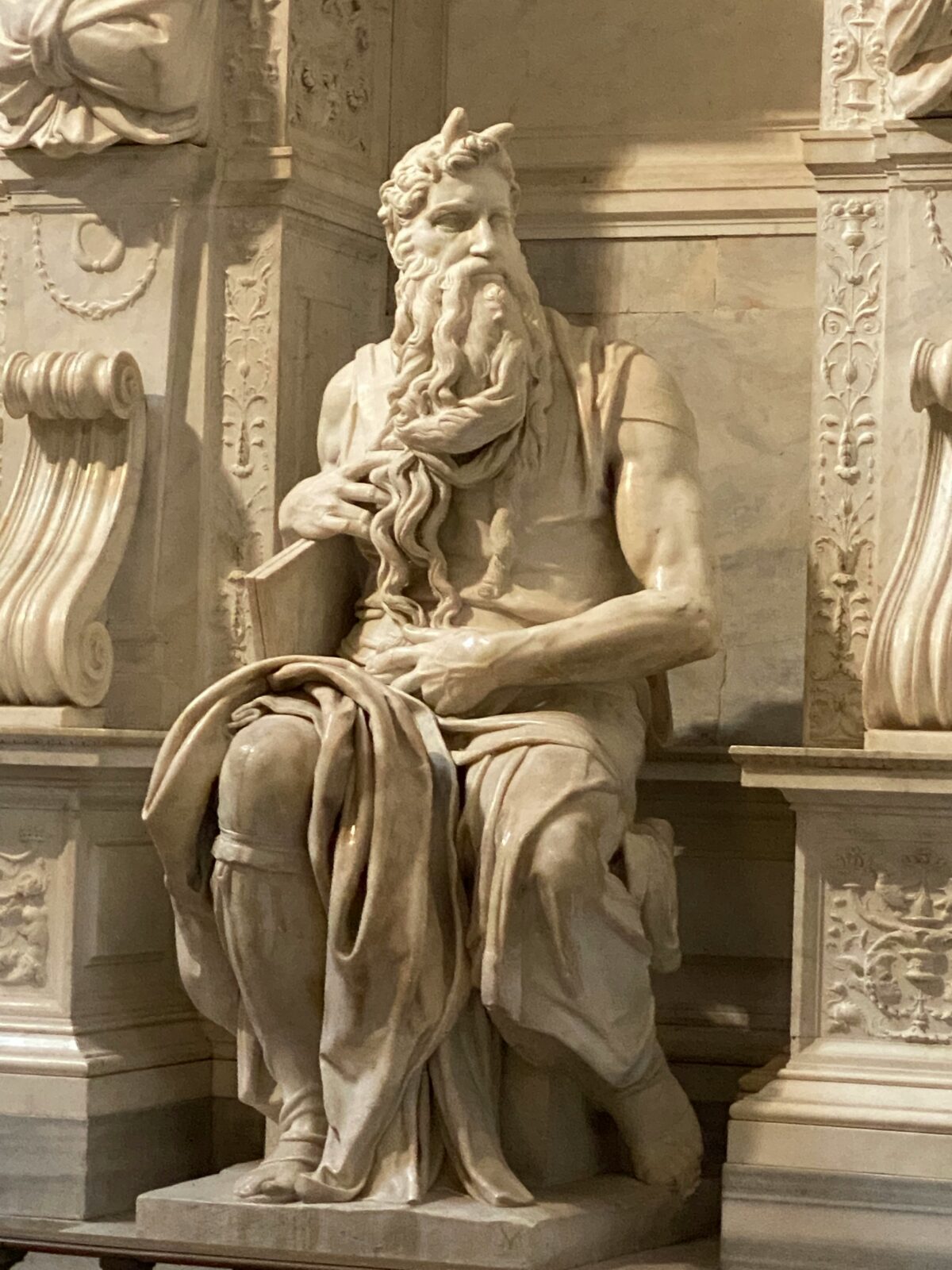
If you’re an art-lover, you may have come across depictions of the Biblical Moses with horns growing from his head, including a famous sculpture by Michelangelo. In Christian iconography, Moses was depicted as having horns for over a thousand years. This happened because Saint Jerome, who translated the Hebrew Bible into Latin Vulgate, mistook a word meaning ‘radiant’ for a similar word meaning ‘horned’ when he translated passages describing the appearance of Moses after receiving God’s Ten Commandments.
Oops!
The error stemmed from the similar Hebrew roots for “horn” and “ray of light.” Ancient Hebrew lacked vowel markings, making such confusion possible. While scholars eventually corrected this interpretation, the horned Moses had already become deeply embedded in Western religious art and culture.
More recently, a poor translation of Pepsi’s slogan ‘Come alive with Pepsi’ was rendered in Chinese as ‘Pepsi brings your ancestors back from the dead,’ while the name of the Chevrolet Nova causes hilarity in Spanish-speaking countries, where ‘no va’ means ‘doesn’t go.’
Avoiding problems like these means being careful and meticulous, obviously, but it also calls for understanding that sometimes (as in the case of Chevrolet) the most literal translation isn’t the best and (as in the case of Pepsi) it’s important for translators to be familiar with not just the language, but also the culture they’re translating for.
Photo Source: https://unsplash.com/photos/a-statue-of-a-man-with-a-sword-1zsQ5rTElE0