Since smartphones became ubiquitous, many of us have been experiencing addiction, feelings of anxiety when our phone is not at hand, and issues with attention span, alongside the tangible benefits of having the internet in our pocket.
But what are the impacts – if any – of smartphones on language acquisition?
The research is still in flux, but it does show that when parents use their smartphones around their children, it has a negative impact on how they interact with them, which in turn can cause problems for children’s development.
From birth, babies are drawn to gazing into adults’ faces. This is a behaviour that is related to later language outcomes, so when caregivers are distracted by smartphones, and spend less time looking into their infants’ faces, this creates a challenging environment for language acquisition. Older, verbal children are also less likely to ask their parents questions when they see them interacting with their phones, and this in turn impacts on their ability to pick up language skills.
New problems give rise to novel words. The issues associated with how technology impacts negatively on how parents and caregivers interact with children is often referred to as ‘technoference.’ Researchers are still exploring exactly how it impacts on language acquisition, but it does seem clear that it’s not a good idea to mix smartphone use and the care of small children, tempting as it can be to seek some distraction from a handy screen.
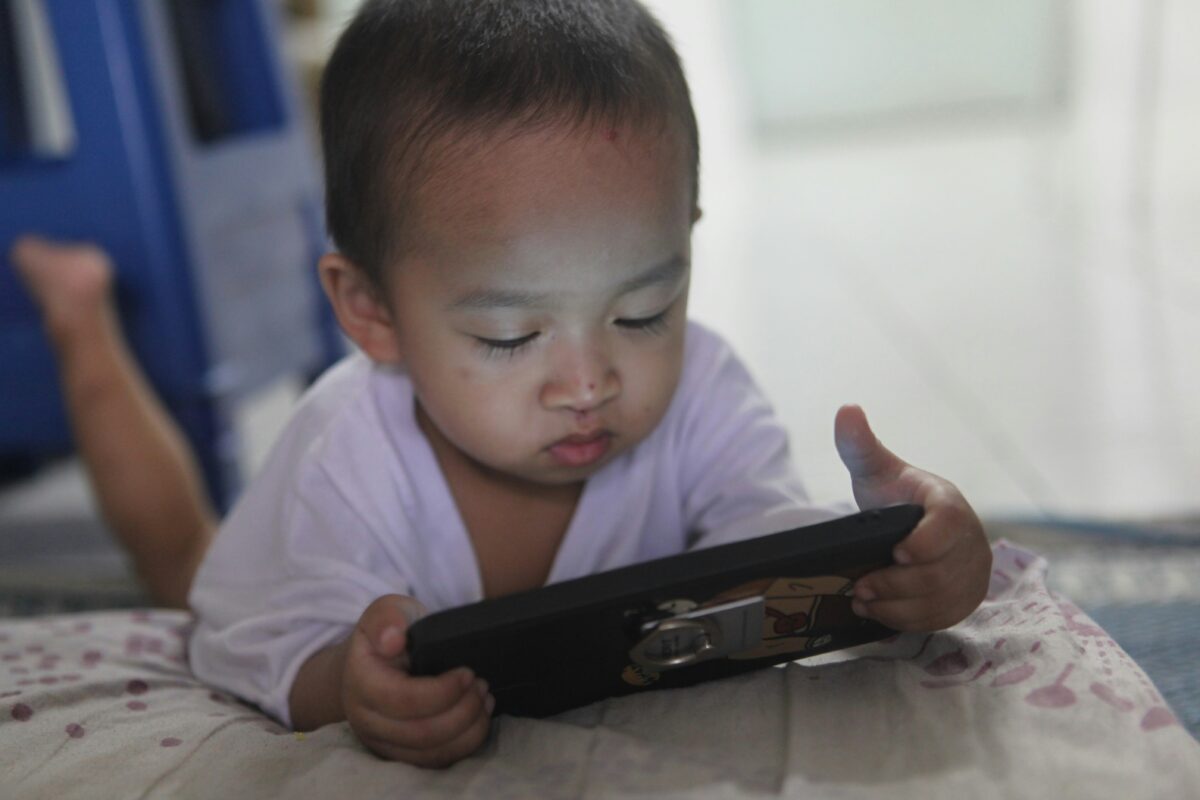
Photo Source: https://unsplash.com/photos/a-small-child-laying-on-a-bed-playing-with-a-tablet-zIkwwCA-mqI