In the early Middle Ages, Ireland was a hotspot for language scholarship. While most people couldn’t read and write, literacy flourished in the monasteries, where monks created beautiful illustrated manuscripts decorated with abstract and figurative art. Mostly, these manuscripts were meticulously copied Gospels, but in the margins are scholarly comments in the Irish language, poems, and even little asides about the monks’ daily lives.
At this time, Irish monks were also actively engaged in establishing monasteries all over Europe. Many towns and cities around Europe still reference their founders in their placenames, like St Gallen in Switzerland (named after Gall, the Irish monk who founded a monastery there) and San Cataldo in Sicily (named after Cathal).
The monks’ manuscripts are remarkable works of art in their own right, and they are also founts of information about European history – Viking raids were common then and are often referenced – and about ecclesiastic life and thinking at the time. They are also the most important primary sources for old Irish as it was spoken and written then – and some of them even feature the unique Irish Ogham script, which is otherwise found exclusively rendered in stone.
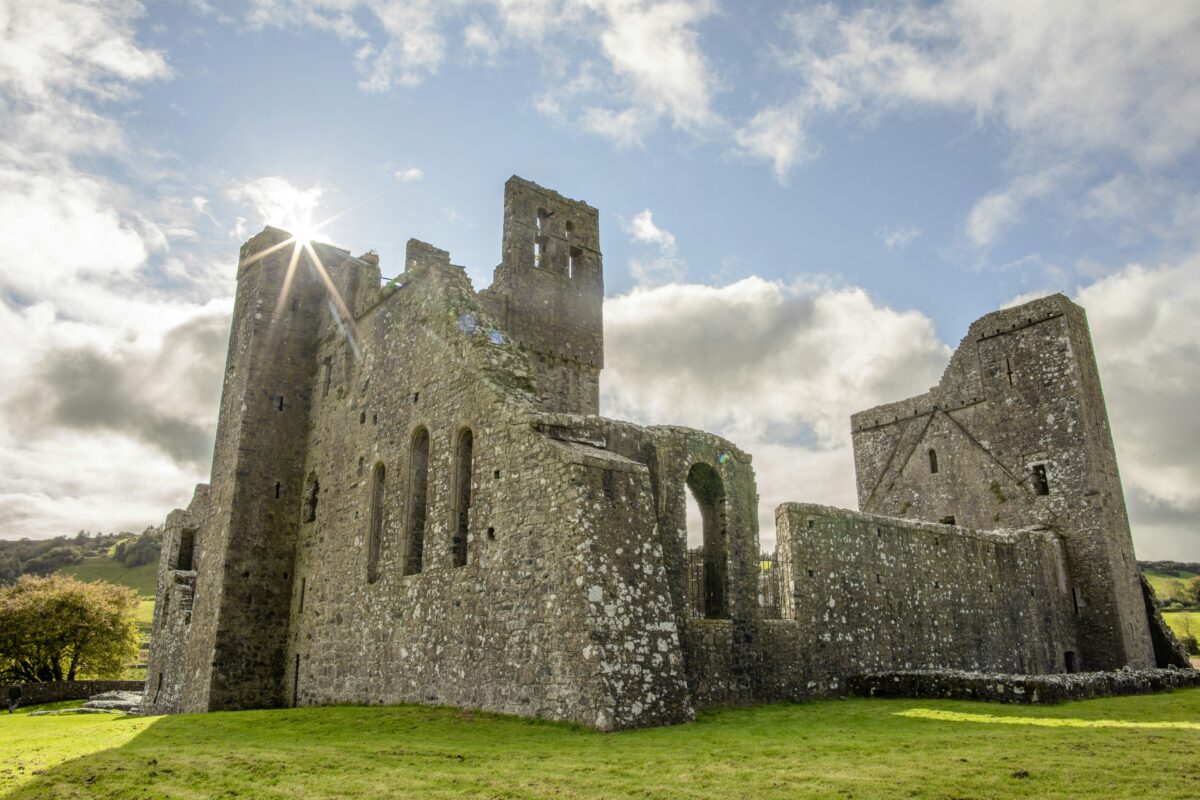
Photo Source: https://unsplash.com/photos/gray-concrete-building-under-blue-sky-during-daytime-4tV3K96nav4