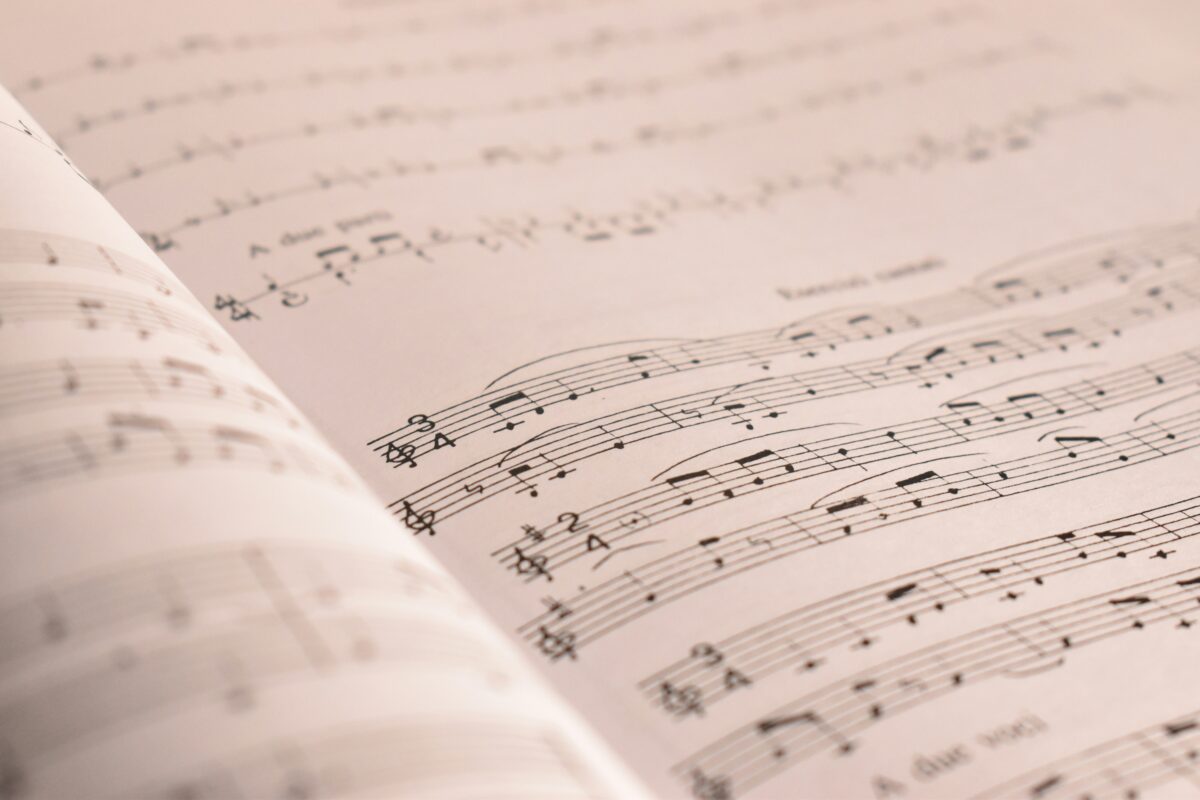
From forte to andante, many of the terms that guide musicians – especially of classical music – are in Italian.
Why is that?
The form of musical notation that we know today was first adopted by Italian composers, who in turn were the first to add words, with meanings like ‘fast’ or ‘slow’ or allegro ‘cheerfully’ to the score, indicating to the musicians how it should be played. The practice of using scores like these became widespread in Italy, and spread from there to the rest of Europe, with these Italian words being adopted as the standard.
At this time, in the 1600s, Italians were also leading the way at printing and distributing sheet music, while the vast influence of the Catholic Church, with its headquarters in Rome, helped to spread Italian sheet music through Church channels.
By the 1800s, with cultural nationalism on the rise across Europe, non-Italian composers started adding annotations in their own languages, often alongside the now generally-accepted Italian terms.
Music scores do more than tell the musicians what and how to play. They also reveal many years of our shared cultural history.
Fortissimo!