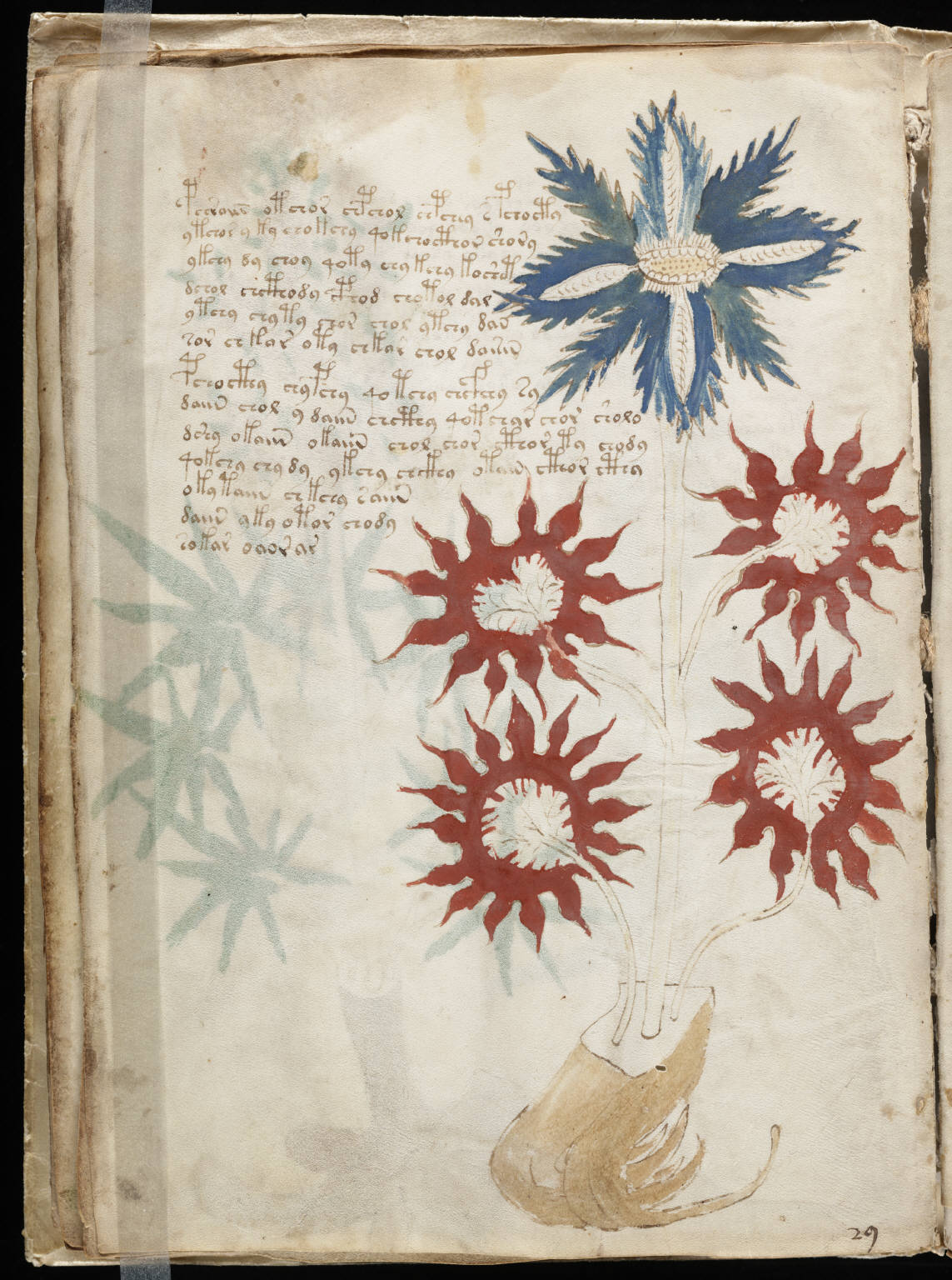
The Voynich manuscript, now located at Yale University, is named after the Polish, British and American book collector Wilfrid Voynich, who acquired it from a Jesuit college in Rome in the early twentieth century. The lavishly decorated manuscript contains over 38,000 characters that have never been deciphered, as well as numerous saucy drawings and depictions of alchemy and plants. It has been dated to the fifteenth century using radio-carbon analysis.
It’s not clear whether or not the manuscript represents a real language or code, or if it’s an elaborate hoax from the late middle ages, but many scholars have used various techniques in an effort to decode it.
New research suggests that the code may have been created using an Italian card game called Naibbe, dating to the same period. This game uses the number from the throw of a die to break language into single or double letters, and then uses the draw of playing cards to determine how to encrypt the letters. Attempts to replicate the text in the manuscript failed, but did produce comparable results.
Photo Source: https://commons.wikimedia.org/wiki/File:Voynich_Manuscript_(32).jpg (See page for author, Public domain, via Wikimedia Commons)