Historian Rachel Mairs has been exploring how Persian and Greek rule shaped language in parts of Central Asia which today fall within Afghanistan, Uzbekistan, Tajikistan, and Pakistan.
From about the fifth century BCE to the second century CE, this area was in a state of constant flux and change as empires expanded, armies invaded, and trade routes were developed. All of this called for a lot of documentation, and these documents were mostly written not in local, spoken languages, but in the languages of the empires in question. In places under Persian rule, administrators wrote in Aramaic and Elamite. Later, after the conquests of Alexander the Great and the rise of Hellenistic kingdoms, Greek became widely used in official and public writing.
The evidence suggests that, during this period, local communities continued to speak their own languages, while those who engaged in commerce, administration, and scholarship wrote in these languages of empire. In other words, they mostly wrote in one language and spoke in another, much as Latin was used as a written language throughout the Christian world for centuries.
Because they occupied different realms, in these regions spoken and written language developed separately, and at various times scripts were adapted to new uses. Aramaic script came to be used for writing Prakrit and some other Iranian languages, for example.
For those who know and understand the linguistic history of this fascinating region, the long-term impacts of Persian and Greek can still be seen.
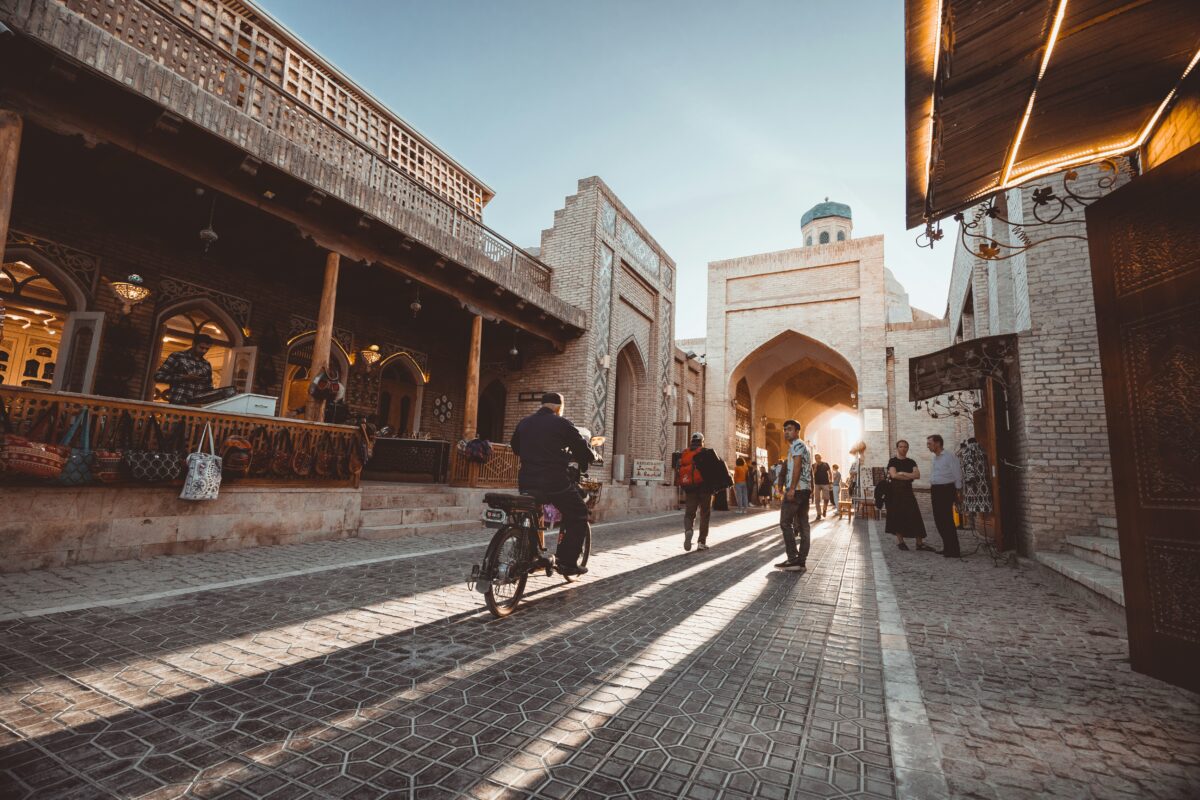
Photo Source: https://unsplash.com/photos/a-person-riding-a-bicycle-on-a-brick-road-between-buildings-2_wymUghgr8