As well as being the only species to talk, we humans are the only ones to make and wear clothing, jewellery, and other adornments. And, of course, we use these things alongside spoken and body language to communicate important messages.
For example, in religions the world over, authorities often wear special garments and/or adornments – especially hats – that make their status clear at a glance. The same goes for important people in other walks of life, such as judges, police and army officials, mayors, and so forth.
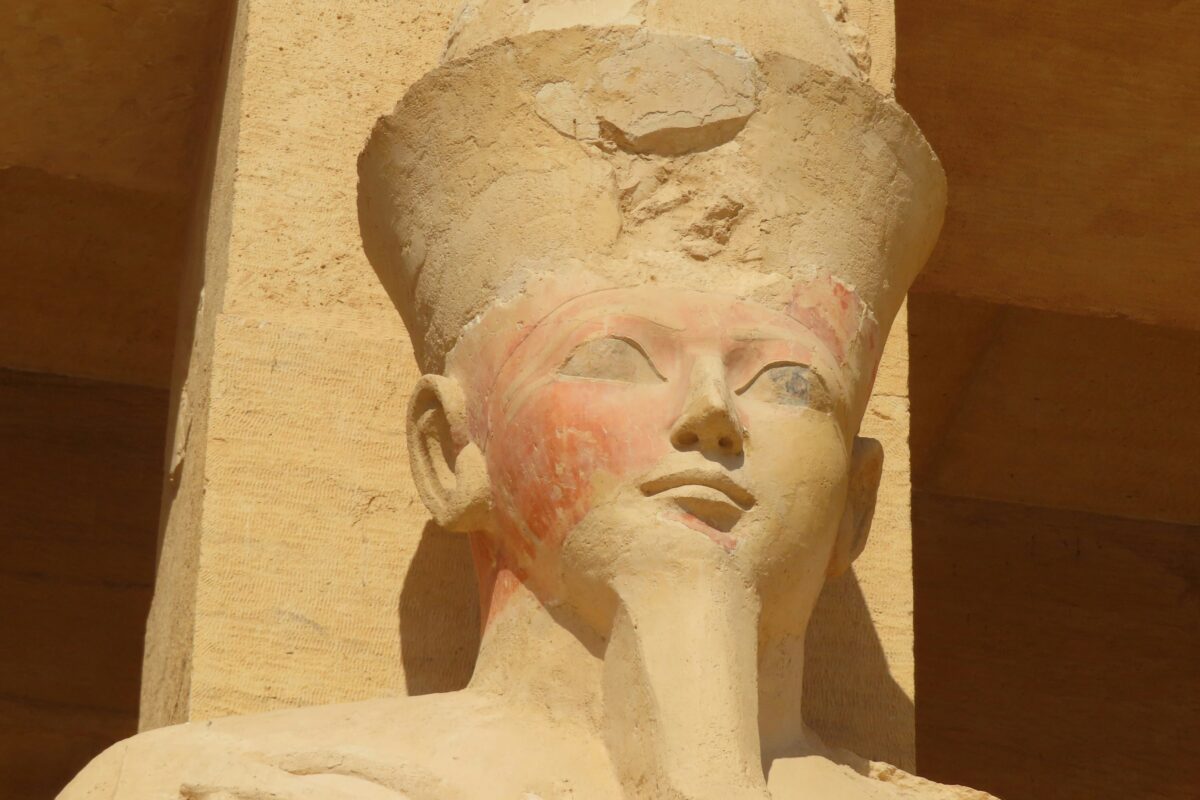
One of the most interesting example of this is the ‘beard’ worn by Hatshepsut, the sixth Pharaoh of the Eighteenth Dynasty of Egypt, who was the second confirmed woman to rule in her own right.
Hatshepsut, although a member of the royal family, was in an unusual position as a female pharaoh who ruled autonomously, rather than as a regent for a biological son. She used clothing, jewellery, and other symbols to convey the idea that she was both a mother and father to the realm – and she was a very successful leader, who oversaw ambitious building projects, and is thought to have presided over an usually peaceful period. Depictions of her made after she came to power often show her wearing a false, ornamental beard and ram’s horns, serving as symbols of authority, whereas earlier portraits had shown her in traditional women’s clothing. She died in about 1459 BC.
Photo Source: https://unsplash.com/photos/text-jcMcPhH5OPs