Almost 50 years after his death, the cultural and linguistic impact of Elvis Presley continues to be felt.
Elvis is considered to have been a true revolutionary. From the mid-1950s, before the concept of cultural appropriation had been coined and debated, he integrated diverse musical genres, including country music, rockabilly, gospel, and the blues.
Alongside his music, Elvis’s image and his public persona penetrated the consciousness of the world, driving youth culture as an entire generation of young people emulated his hairstyle, dress sense, and signature moves. Teenagers integrated the words and phrases he used into their own language (referring to someone as a ‘hound dog’ and so on). Often, these words and phrases originated in the African American musical culture that Elvis often tapped into. In his own words, he said: ‘[They] been singing it and playing it just like I’m doin’ now, man, for more years than I know. They played it like that in their shanties and in their juke joints and nobody paid it no mind ’til I goosed it up.’
While in more recent years, Elvis has been retrospectively criticised by some for the ways in which he used African American music, at the time white racists were horrified by the fact that he was helping to make African American music and language commercial and mainstream. His massive popularity made the music business see that all these genres could make lots of money and laid the ground for generations of singers to come.
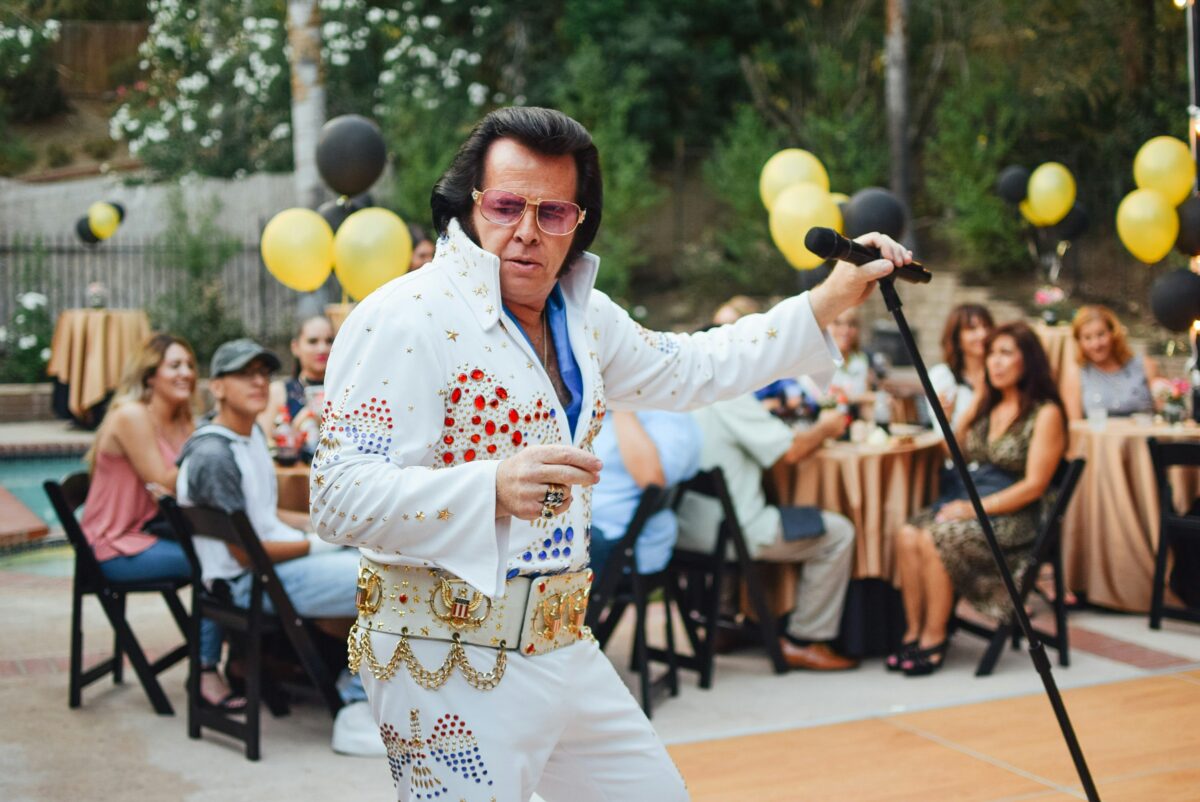
Photo Source: https://unsplash.com/photos/a-man-dressed-in-elvis-clothing-holding-a-microphone-NGY_fydnUIo