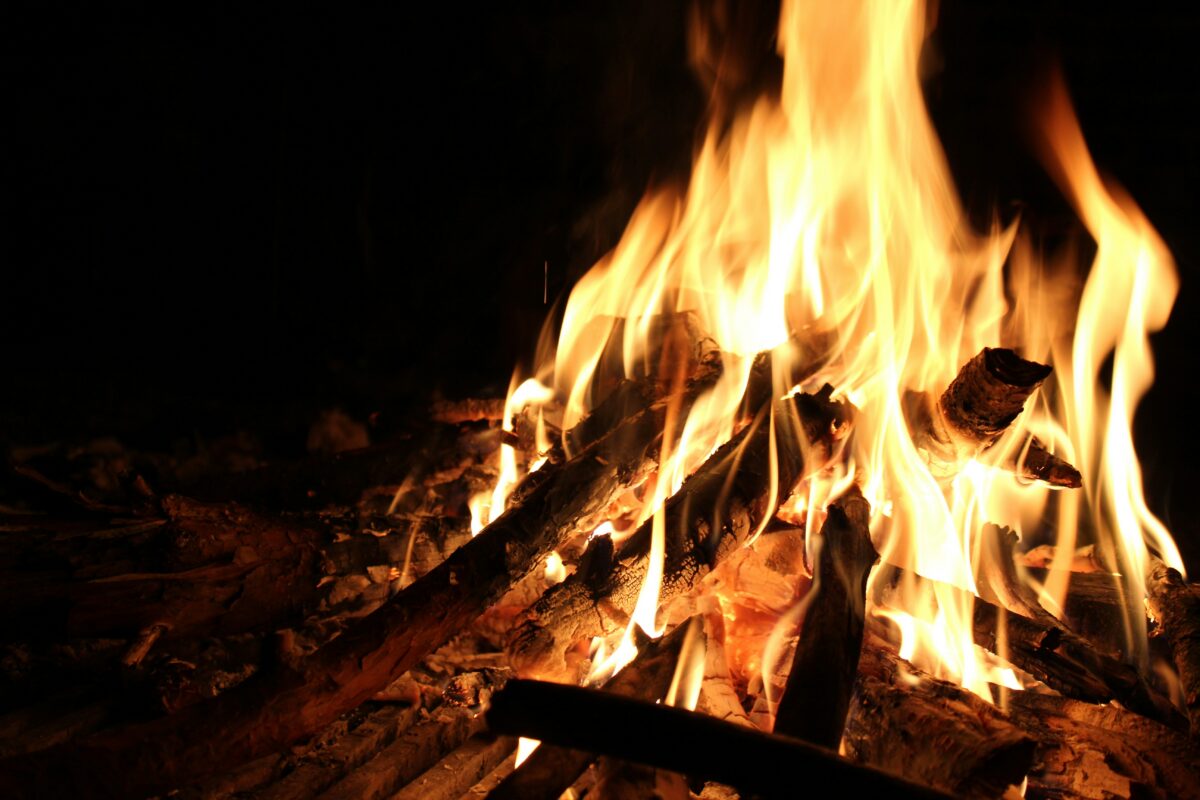
Humanity’s taming of fire was a decisive step forward in terms of cultural and technological advancement. But did you know that it would also play an important role in communication and language development?
The earliest example of humans using fire dates to about 400,000 years ago. At a site in Suffolk, England, archaeologists uncovered evidence of people – almost certainly Neanderthals – using pyrite stones to create sparks that would light fire.
Domestic fires made it possible to cook, expanding the range of foods digestible to humans, and to live in colder areas than would otherwise have been possible. And in a world in which humans were still few in number, dispersed across large territories, the presence of fires in the landscape – visible from far away – communicated a very clear message to other human groups: we’re here.
But that’s not the only contribution that fire made to the development of language. Fires formed the centre of camps, of homes, and of villages. They became focal points around which groups gathered for warmth and to prepare and share meals. In these congenial settings, people engaged socially and exchanged knowledge. Researchers believe that, in this way, fireside settings became hotbeds of cultural and linguistic exchange, facilitating the development of language and of human culture as we know it today.
While modern homes increasingly lack fireplaces, our instinct as humans to gather around a fire remains strong. Fireside gatherings, and even candles burning brightly on our tables and mantles, are still places where people come together to talk and to share stories, and in this way to become part of a chain of linguistic exchange that dates back to remote antiquity.
Photo Source: https://unsplash.com/photos/bonfire-zuYVmsUgIrw