Anne Lister, born in 1791 into a wealthy Yorkshire family, grew up to manage the family estate of Shibden. She was also an extensive diarist, who wrote at length about her interests, including medicine, mathematics, and infrastructure such as railways and canals.
And her numerous love-affairs with other women.
Living at a time when same-sex relationships were seen as completely unacceptable, Anne used a code, which she referred to as ‘crypt hand’, to write about her love affairs. The code itself was quite simple, including the Greek alphabet, zodiacal and mathematical symbols, and punctuation; it was devised by a teenaged Anne and her then-girlfriend, Eliza, and Anne would continue to use it all her life to write about matters she wanted, or needed, to keep secret.
Forty years after Anne’s death in 1840, her heir discovered her diaries and managed to translate the code. Horrified, he hid all her diaries behind a panel in the wall of Shibden Hall. They would not be revisited until the 1980s, when historians Dorothy Thompson and Patricia Hughes translated them in full. They have subsequently been much explored by historians and researchers with an interest in lesbian history generally. They also beg the questions: are there things today some people might like to talk about, but can’t? How do we apply codes to our language now?
In 2011, Anne Lister’s diaries were added to the register of the UNESCO Memory of the World Programme.
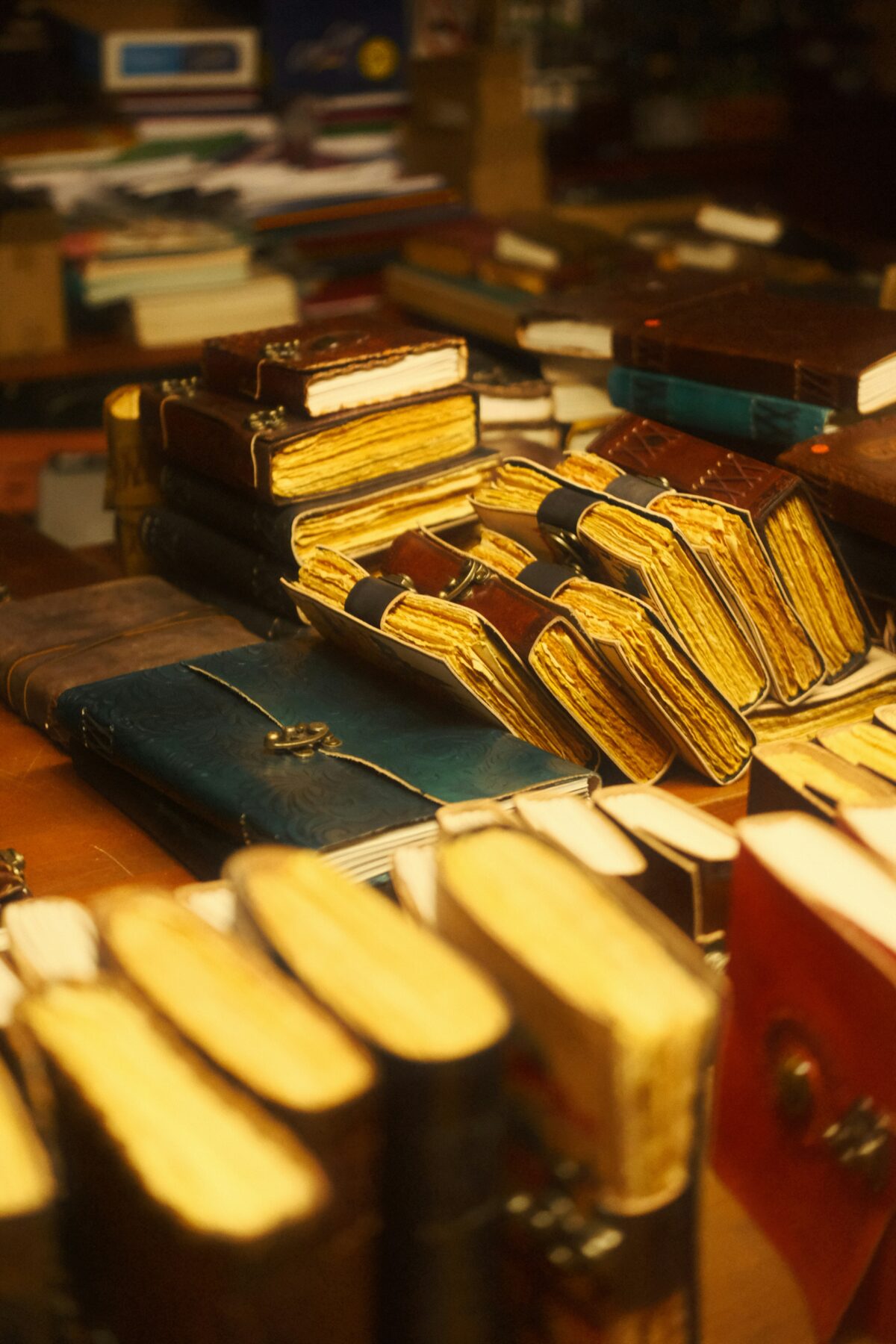
Photo Source: https://unsplash.com/photos/collection-of-antique-leather-bound-journals-and-cloth-bound-books-fYitW3VDSDw