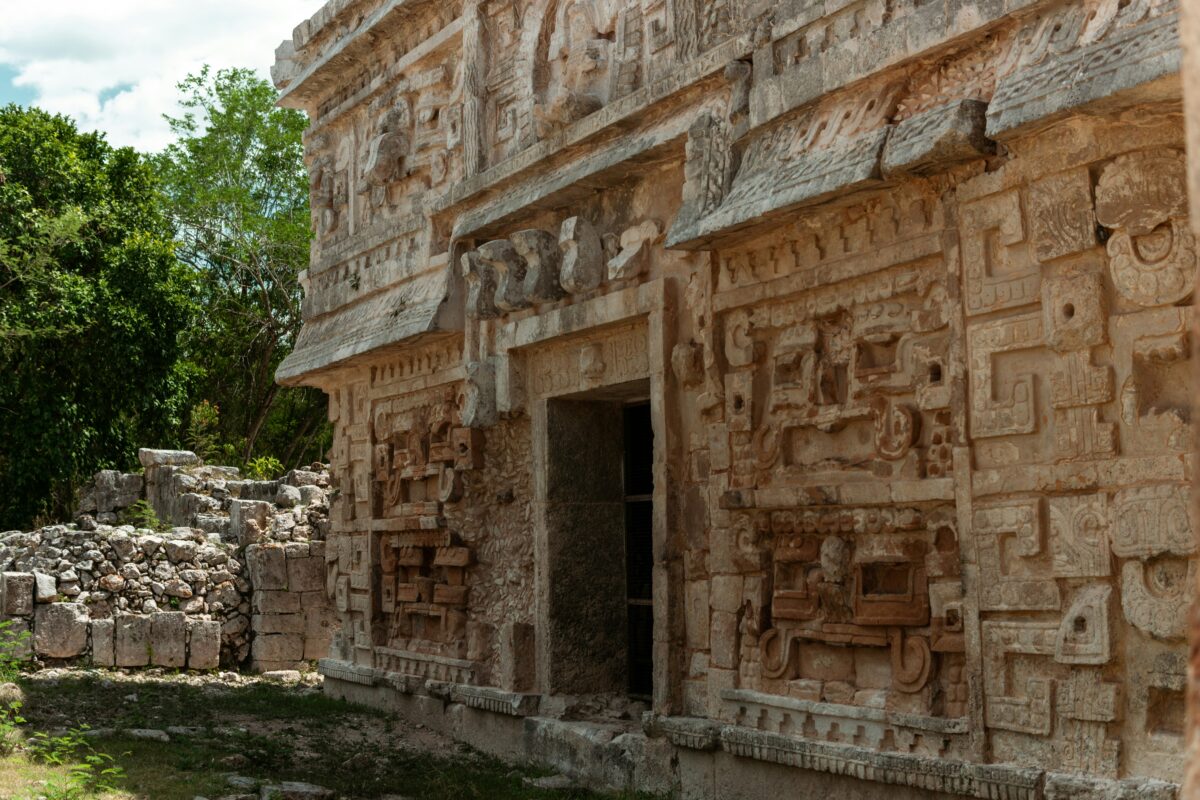
Historical linguists love solving puzzles, but some long-ago languages that were once written down remain untranslated, even after years of study.
The reasons why a written language can evade translation can be various. Often, there just isn’t enough text to give scholars the material they need to decipher it. For example, the Olmec people – who lived in what is now south Mexico from about 1200-400 BCE, left inscriptions that appear to be an early writing system, but archaeologists haven’t found enough of them to start the process. And the Rongorongo script discovered on Easter Island, and apparently used until about 1860, used images of birds, people, and abstract shapes in what appears to be a written language – but as it is found on just a few badly- damaged wooden tablets, there also isn’t enough material for linguists to be able to study it properly.
Even the Etruscan language – spoken in what today is Italy from about 700-50 BCE – is a bit of a puzzle. It was written using letters derived from the Greek alphabet, so in one sense it is legible, but it appears to be unrelated to most European languages, which makes it very difficult to understand it. The hypothesis on which most scholars agree today is that it is related to other languages spoken before Latin in Northern Italy, known as Tyrsenian. These languages predate the arrival of Indo-European peoples in Europe.
We speak just about every language imaginable here at 101translations. Get in touch to learn how we can help you with your translations needs at 👉https://101translations.com/
#UndecipheredLanguage #Olmec #Rongorongo #Etruscan #Linguists #DidYouKnow #101Translations #LanguageExperts #Culture #Facts
Photo Source: https://unsplash.com/photos/a-stone-building-with-carvings-on-the-side-of-it-klF6zDrDtvY