101translations

Categories
Interesting facts

Origin of Language

As we have discussed in various blog posts, all living things communicate in one way or another, and many animals use forms of communication that are relatively sophisticated, sometimes even among members of different species.

But only human beings have language. And while language is at the heart of everything we do as a species, there are still lots of big questions about how it evolved, and why. The one thing we do know is that language started long before anyone recorded it.

Some biological factors appear to be essential to the development of spoken language. The brain needs to have a certain capacity for abstract thought, which depends partly on its size. So, it’s reasonable to infer from the skull size of fossil remains that language may have been possible in hominids of a certain brain size. The position of the larynx also provides some clues because the larynx is essential to utter specific sounds (as opposed to, for instance, more generic growling or barking).

Language also relies on grammar, which is a general set of rules that everyone within the language group must use to understand one another. Some linguistic researchers believe that the capacity for language, and therefore grammar, is innate; that babies are born with this ability already programmed into their brains.

One thing, however, is certain: language is a defining feature of our species. It makes us who we are and has given us the gift of communication that is far more complex, and much richer, than that of even our closest relatives.

Photo Source: https://unsplash.com/photos/unknown-person-writing-on-chalkboard-jBSTNenQxok

Categories
Interesting facts

Great Translators of the World – William Tyndale

William Tyndale, who was born in England in about 1494, is chiefly remembered for his theological and political contributions to the Protestant Reformation of the fifteenth century, but his contributions to the art of translation are no less important. In fact, translation was an essential element of the Reformation, as one of the major changes the Protestant churches sought was for liturgical and scriptural materials to be translated into, and used in, the local vernacular languages.

Among his chief works, Tyndale translated much of the Bible into English, drawing directly on texts in Hebrew and Greek; he was fluent in French, Greek, Hebrew, German, Italian, Latin, and Spanish, as well as his native English. His translations were the first to be reproduced using the printing press, then still quite a new invention, and would drive Reformation thinking across the English-speaking world.

Ultimately, Tyndale was executed as a heretic – first strangled and then burnt at the stake. However, this was on grounds of his opposition to the English King Henry 8th’s plans to annul his marriage and had nothing to do with the quality of Tyndale’s translations, which were excellent.

The King James Bible, which remains the standard text for British Anglicanism – and which has often been praised for the quality of the translation – was heavily based on Tyndale’s original work. Its impact on the English language, and on the twists and turns of history, is immeasurable.

Photo Source: https://unsplash.com/photos/two-holy-bibles-eUHzljOBL6A

Categories
Interesting facts

Deep Voices

We humans communicate with words – and sometimes also with sign language – but things like body language, gestures, and even the pitch, tone and timbre of our voices matter a lot, too.

For example, men typically speak with lower voices than women, and men’s voices are in general readily distinguishable from women’s. In societies in which most power is – or historically has been – in the hands of men, that means that lower voices are often associated with authority.

Deeper voices are also often associated with men perceived as ‘more masculine’ than others and are often experienced by women as more attractive. Some research also suggests that men with deeper voices are, in fact, statistically more likely to have genetically healthier children, suggesting that a deep voice in a man is one indicator of health.

On the other hand, research also suggests that women perceive men with deeper voices as more likely to be unfaithful. So, you know, food for thought.

Photo Source: https://unsplash.com/photos/man-in-blue-denim-jacket-holding-microphone-BDbyTmqJEt8

Categories
Interesting facts

Cabo Verde Creole

The Cabo Verde, or Cape Verde, islands are located off the west coast of the African continent. They were uninhabited until the 15th century, when Portuguese navigators discovered them and started settling them. For several centuries, the islands’ economy was based on the Atlantic slave trade and by the nineteenth century they were in serious economic decline.
 
As a result of this complex and tragic history, the people of Cabo Verde are of mixed European and West African descent. Although the official language of the islands is Portuguese, the native language of the islands is Cape Verdean Creole, considered by linguists to be the oldest living creole, and recognised as one of the most widely spoken, as it thrives not just on the islands, but also among the Cape Verdean diaspora. Today, it combines elements of grammar from various West African languages with a vocabulary largely drawn from Portuguese, albeit retaining phonetic norms from the 15th -17th centuries, rather than those in use in Portugal today.
 
In recent decades, the government of Cabo Verde has proposed making Creole an official language. However, this will require it to be standardised: as it has several variants, this is a potentially tricky issue, as one variant might end up being elevated to a ‘standard,’ annoying the speakers of other variants.
If you are interested in hearing Cabo Verde creole, you might enjoy checking out some of the islands’ traditional music, which is rightly renowned around the world. Cesária Évora probably is its most internationally famous performer.
 
Photo Source: https://unsplash.com/photos/people-on-beach-during-daytime-1yIZMGQUuzk
Categories
Interesting facts

Language of Comic Books

Comic books and graphic novels are generally enjoyed as a solitary, silent experience, but the visual and written representation of sound is a big part of what makes them so expressive.

Linguists call the way in which comic book artists render sound ‘textual audio.’ This refers, among other things, to the heavy use of onomatopoeia (the use of made up words to reproduce non-language sounds), often in combination with the liberal use of punctuation indicating emphasis, to communicate what a particular action sounds like: for example, a kiss (SMACK!!), a punch that’s as devastating as a gunshot (KAPOW!!!), or an explosion (BOOOOOM!!!!).

And while comic book artists often draw on a rich library of textual audio that has been used before, and that everyone recognises, they can also invent new sounds to match their characters and storyline. Often, these sounds only make sense in the context of the image and the specific action it depicts.

Translating comic books is an exciting challenge. Some onomatopoeia works quite well in multiple languages, at least so long as they have the same writing system and similar phonetics, but sometimes it doesn’t work at all, and the translator must find a sonic equivalent in the target language, while avoiding unwanted connotations. And it’s more difficult again when translating from a language with a completely different writing system to the target language (think Japanese into German, for example).

Comic books, a literary format that is often underestimated in terms of its cultural reach, can call for the most refined, most delicate, most sophisticated translating skills of all.

GADZOOKS!!!???!!!!

Photo Source: https://unsplash.com/photos/the-big-bang-theory-dvd-27kCu7bXGEI

Categories
Interesting facts

Tongue twisters

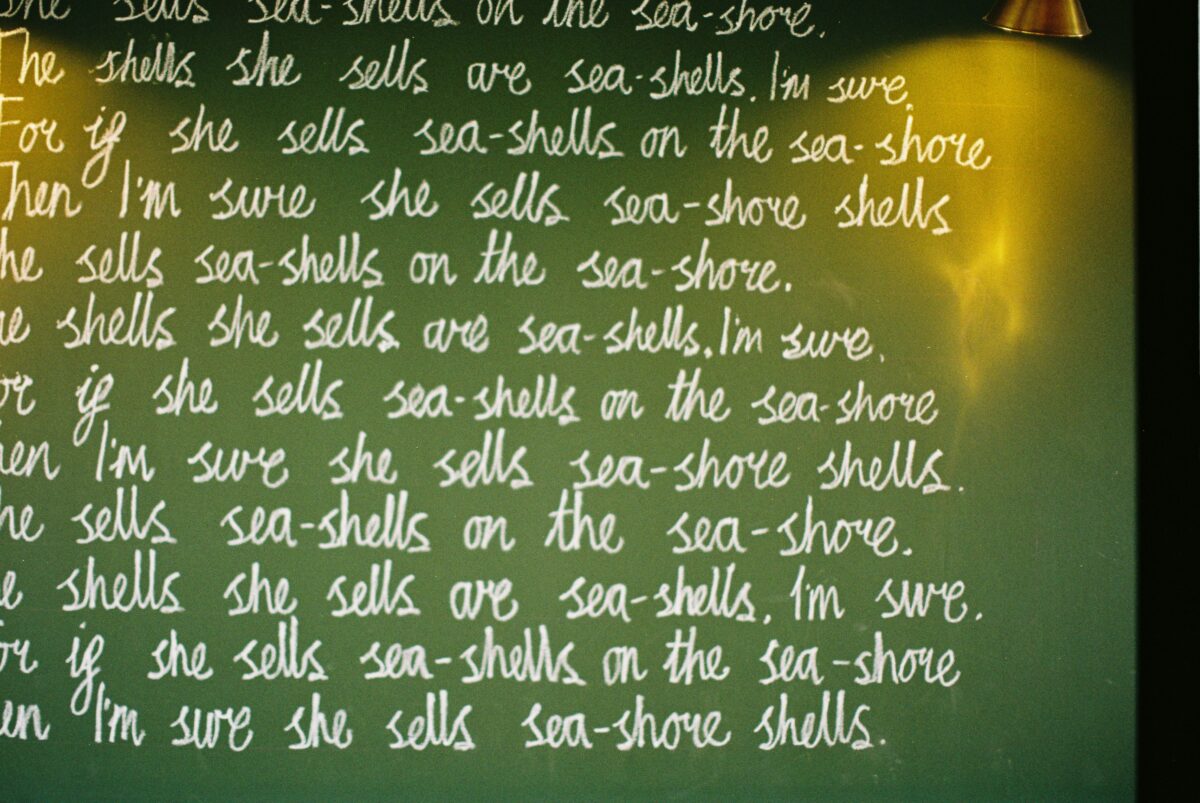
She sells seashells on the seashore.

Tongue twisters – in any language – are a lot of fun, and they also provide us with opportunities to work on our diction and fluency. Often, they rely on the speaker alternating rapidly between phonemes that are similar, but different. Frequently they also use a mixture of alliteration and rhyme.

Tongue twisters became extremely popular staples of English-language humour in the nineteenth century, and they exist in other languages too. In Spanish, a tongue twister is a trabalenguas (tongue jammer), for example; and the sign language version of a tongue twister is known as a “finger fumbler”.

Experiments conducted in-house at 101translations seem to suggest that tongue twisters are often easier to enunciate in one’s second language. Contact us for details!

Photo Source: https://unsplash.com/photos/she-sells-sea-shells-on-the-sea-shore-text-schbWii1C4U

Categories
Interesting facts

Great Translators of History – Catherine Par

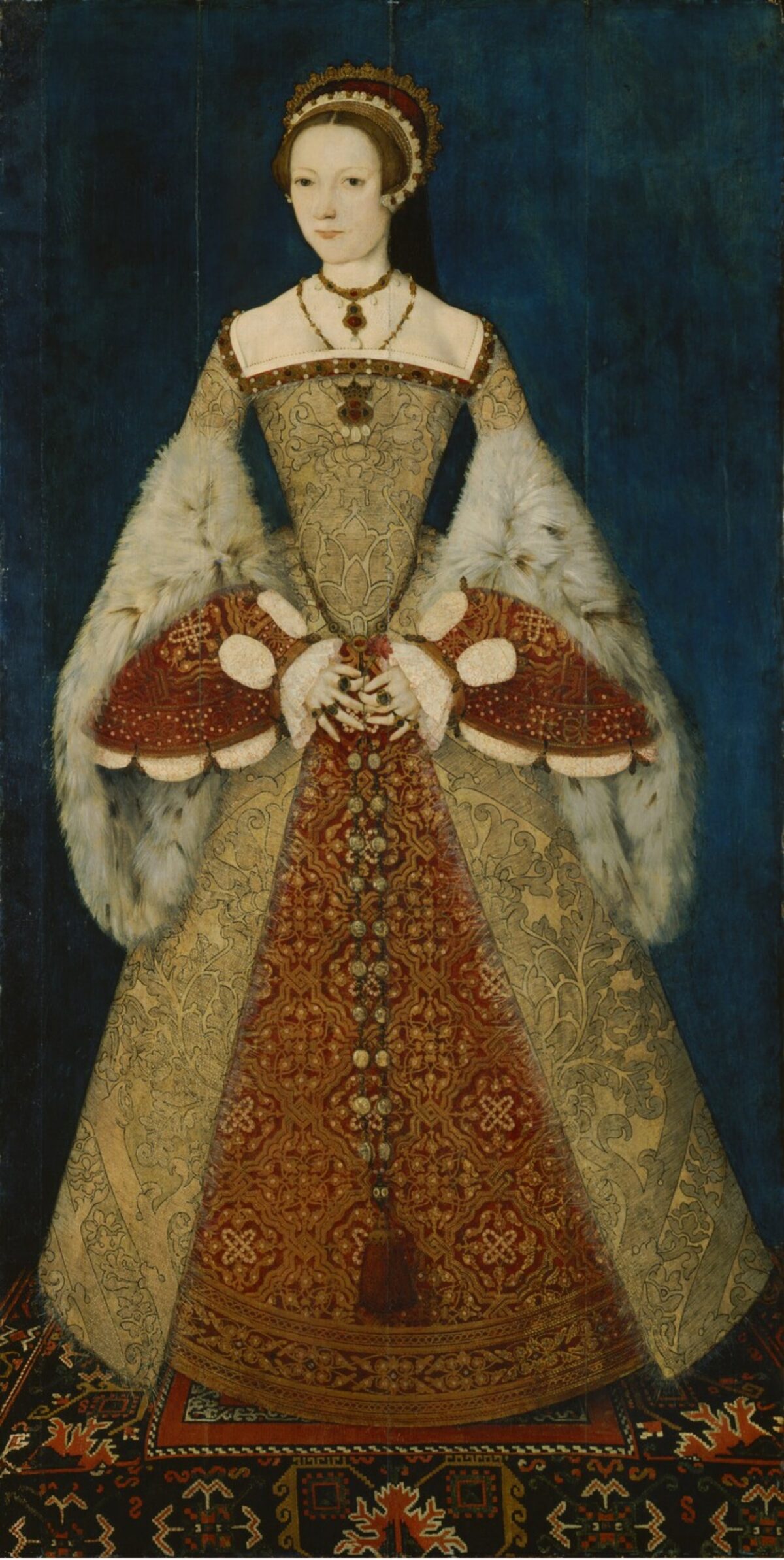
Catherine Parr (born in 1512) is chiefly known for being the last of the British King Henry 8th’s six wives. With four husbands of her own, over the course of her lifetime, she was no slouch in the marrying department, either.
 
But Catherine was also a writer and translator. She was the first woman in England to have a printed book – Prayers or Meditations – published under her own name. As well as English, she was fluent in French, Italian and Latin, and learned Spanish as an adult.
 
Her translations include Psalms or Prayers taken out of Holy Scriptures, a work by Bishop John Fisher originally published in Latin. She would go on to translate widely, focusing largely on religious texts – which in those Reformation days also carried political weight.
 
Photo Source: https://commons.wikimedia.org/wiki/File:Catherine_Parr.jpg