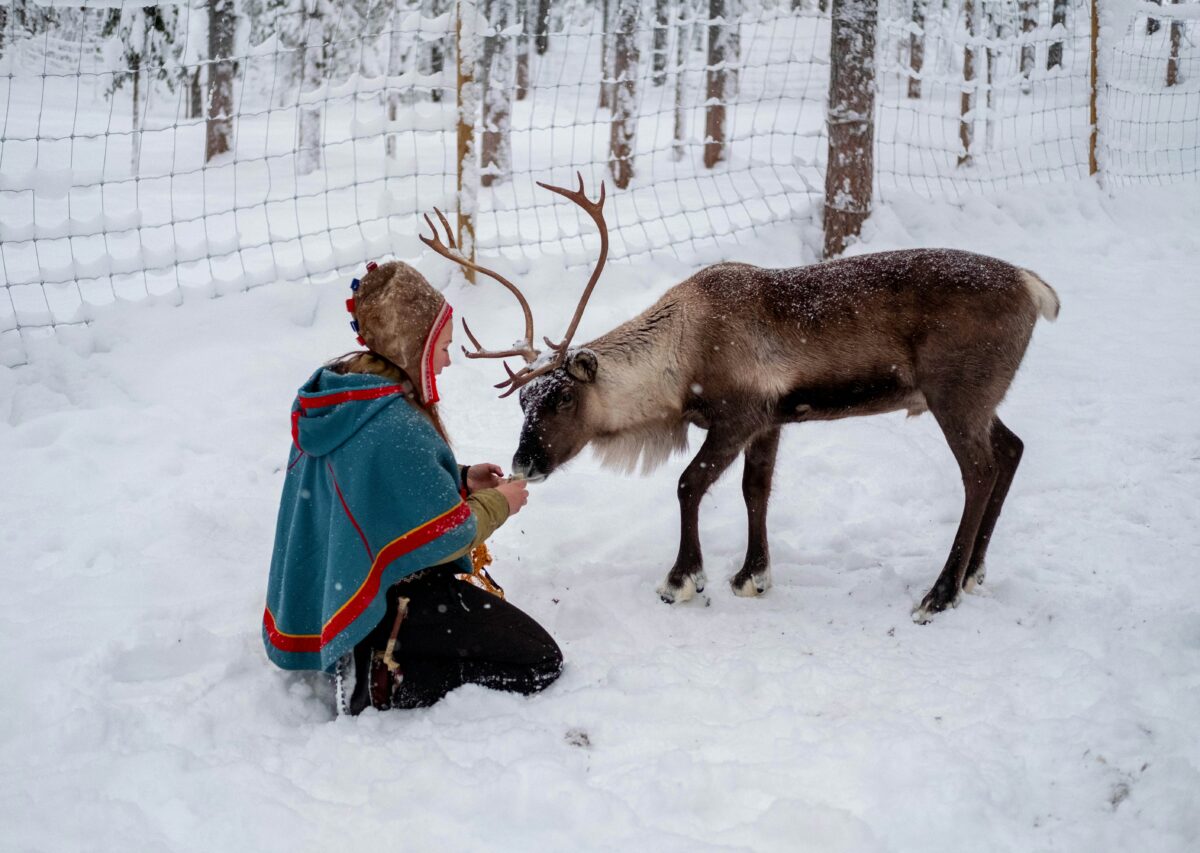
Sámi are an indigenous culture living across the northern parts of Norway, Sweden, Finland, and Russia. There are nine Sámi languages with North Sámi the most widely spoken, with around 20,000 speakers.
One of the challenges with preserving the use of Sámi is the fact that the speakers live in different places, with different levels of official recognition.
In Sweden, it is recognised as a minority language and officially children have the right to be taught through it, but in practice often there aren’t enough teachers, local areas don’t implement the law, or the number of speakers is too low to provide classes. Over the generations, this has led to the current situation, which is that only a small percentage of Sámi people speak their own language fluently enough to effectively pass it on to their children. There are also strong folk memories of earlier times, when Sámi children were punished and made to feel ashamed for using their mother tongue.
Today, experts point out that, while it is very important for minority groups to speak the majority language fluently, there’s no reason why they can’t also speak their own language. The human brain evolved to manage more than one language, and the benefits of bilingualism are very well-known.
Younger generations of Sámi speakers are increasingly creating online content in their native tongue, providing some hope for a brighter future for a language under pressure.
Photo Source: https://unsplash.com/photos/woman-in-red-coat-and-black-pants-sitting-on-snow-covered-ground-beside-black-and-brown-vfaD7bscm7I