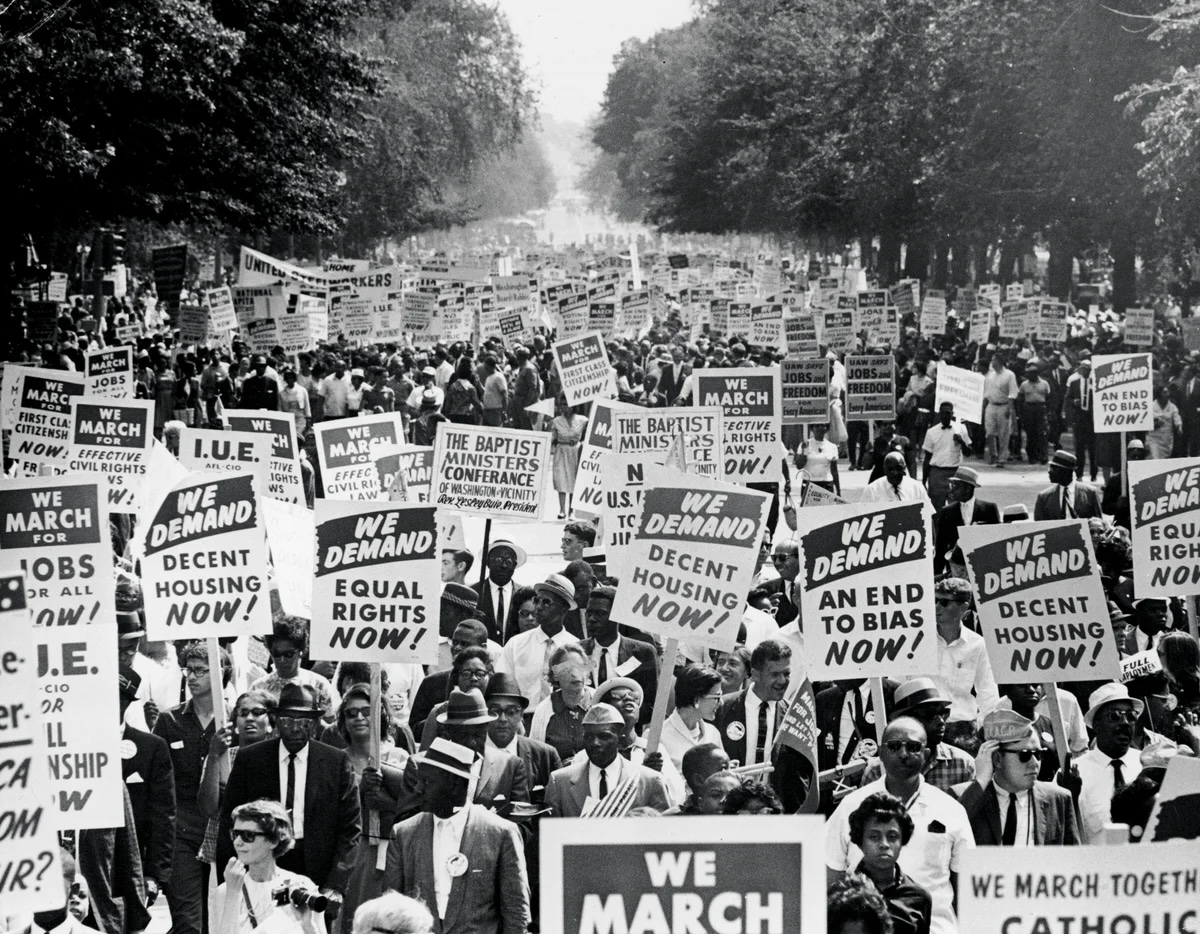
In 1973, with the American civil rights movement increasingly impacting on academia, the term Ebonics was coined, a portmanteau word combining “ebony” with “phonics”, to refer to how Black Americans speak English, with influences from West African languages, and dialectal forms that emerged within Black communities.
The term escaped academia in the 1990s and entered mainstream discussions about how Black students should be taught in school, and how their distinctive dialects should be treated. Did they need to be ‘corrected’ to standard American English, or should their modes of speaking be recognised as formal variants in their own right, and accepted or even taught in school?
The term ‘ebonics’ remains controversial among African American linguists, some of whom see it as trivialising an essential debate.
Photo Source: https://www.scientificamerican.com/article/from-civil-rights-to-black-lives-matter1/