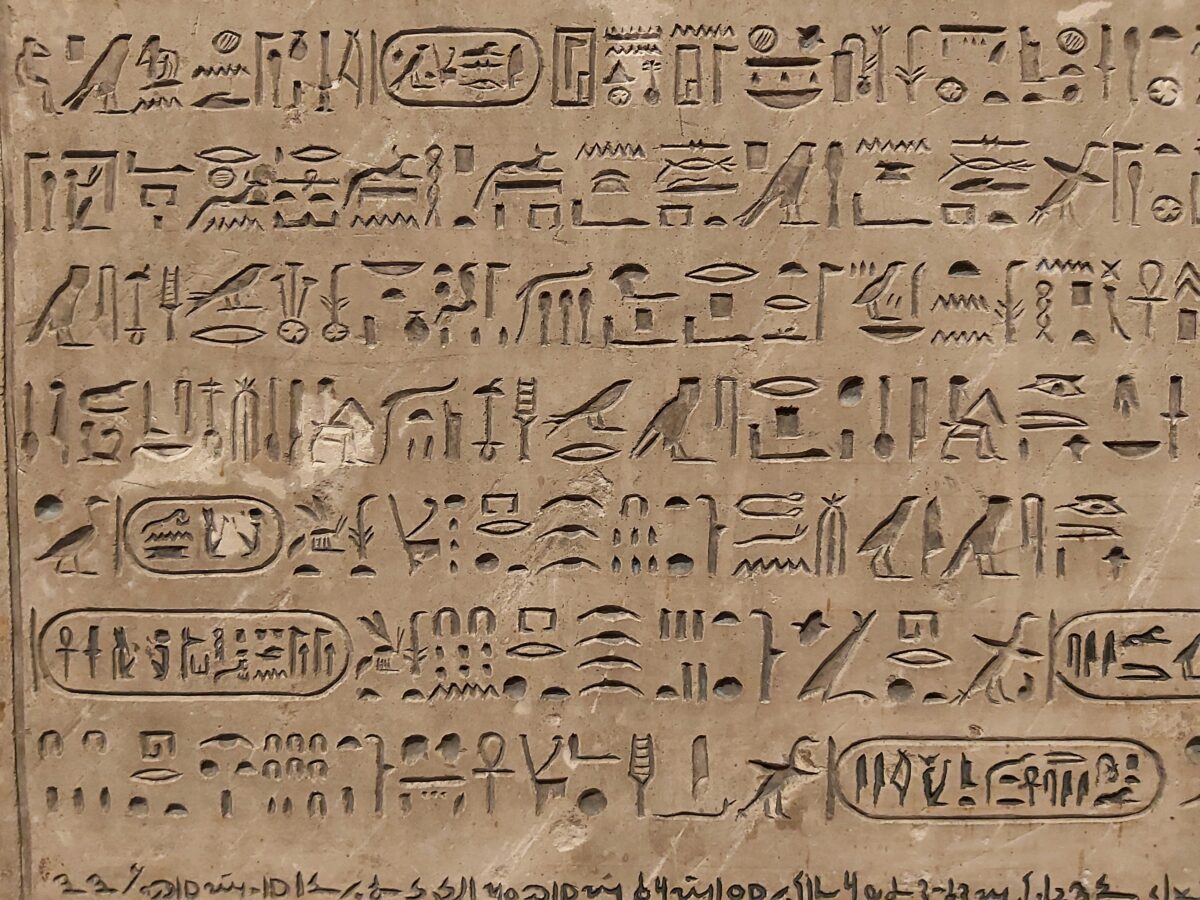
Jean-François Champollion, born in 1790, was well-known from an early age for his extraordinary linguistic talents, mastering Coptic, Ancient Greek, Latin, Hebrew, Ge’ez, Syriac, Chaldean, Classical Chinese, Persian and Arabic, as well as his native French.
The early 19th century was a period of deep interest in Egypt, following Napoleon’s campaign there, and the discovery of the legendary Rosetta Stone, which was written in three languages, and made it possible for scholars to start interpreting Egyptian hieroglyphs. In this cultural context, and with his extraordinary linguistic abilities, Champollion was excellently placed to start studying the topic.
In 1822, Champollion revealed that the Egyptian writing system combined phonetic and ideographic signs. By the late 1820s, Champollion was able to read Egyptian texts that had never been deciphered before.
Champollion died in 1838, aged just 41. His grammar of Ancient Egyptian was published posthumously and would form the basis of many subsequent studies in the field. Various locations have been named in his honour, the more striking of which is the Champollion crater, a lunar crater on the far side of the Moon.
Photo Source: https://unsplash.com/photos/brown-and-black-quote-wall-decor-w-J0NlOsa3U