101translations

Categories
Interesting facts

The Importance of Local Spelling

Certain languages, like Portuguese, Spanish and English – but also many others – are spoken in more than one place. And with the passage of time, the various versions of the language can become different.

In the case of English, most local and national variants are mutually intelligible, but there still are important differences, and sometimes even differences that seem quite subtle at first glance can matter a lot.

For example, Canadian Prime Minister Mark Carney was criticised recently for using British spelling, rather than Canadian.

The difference between British and Canadian spelling is very small. Canadian English follows a middle ground between US and British English, with some of the spelling conventions from each. For example, it uses ‘z’ in words like ‘industrialize’ rather than ‘s’ as British spelling often does (but not always – we’ll be writing about the Oxford spelling conventions in another post). However, like the British, Canadians write about ‘colour’ rather than ‘color,’ as Americans do.

Experts in Canadian English have gone so far as to urge Carney to stick strictly to Canadian spelling and, where possible, terminology, to implicitly make the point that Canada is just as important as anywhere else. Especially important, in fact, to the Canadians.

As translators, we’re extremely aware of the importance of these differences, which can seem small to outsiders. Using spelling and terminology that are correct, but that belong to somewhere else, can make a text sound like it was written for others.

Photo Source: https://unsplash.com/photos/a-library-with-books-on-shelves-nLDr4OyN2OM

Categories
Interesting facts

Fire

Humanity’s taming of fire was a decisive step forward in terms of cultural and technological advancement. But did you know that it would also play an important role in communication and language development?

The earliest example of humans using fire dates to about 400,000 years ago. At a site in Suffolk, England, archaeologists uncovered evidence of people – almost certainly Neanderthals – using pyrite stones to create sparks that would light fire.

Domestic fires made it possible to cook, expanding the range of foods digestible to humans, and to live in colder areas than would otherwise have been possible. And in a world in which humans were still few in number, dispersed across large territories, the presence of fires in the landscape – visible from far away – communicated a very clear message to other human groups: we’re here.

But that’s not the only contribution that fire made to the development of language. Fires formed the centre of camps, of homes, and of villages. They became focal points around which groups gathered for warmth and to prepare and share meals. In these congenial settings, people engaged socially and exchanged knowledge. Researchers believe that, in this way, fireside settings became hotbeds of cultural and linguistic exchange, facilitating the development of language and of human culture as we know it today.

While modern homes increasingly lack fireplaces, our instinct as humans to gather around a fire remains strong. Fireside gatherings, and even candles burning brightly on our tables and mantles, are still places where people come together to talk and to share stories, and in this way to become part of a chain of linguistic exchange that dates back to remote antiquity.

Photo Source: https://unsplash.com/photos/bonfire-zuYVmsUgIrw

Categories
Interesting facts

Anne Lister and ‘Crypt Hand’

Anne Lister, born in 1791 into a wealthy Yorkshire family, grew up to manage the family estate of Shibden. She was also an extensive diarist, who wrote at length about her interests, including medicine, mathematics, and infrastructure such as railways and canals.

And her numerous love-affairs with other women.

Living at a time when same-sex relationships were seen as completely unacceptable, Anne used a code, which she referred to as ‘crypt hand’, to write about her love affairs. The code itself was quite simple, including the Greek alphabet, zodiacal and mathematical symbols, and punctuation; it was devised by a teenaged Anne and her then-girlfriend, Eliza, and Anne would continue to use it all her life to write about matters she wanted, or needed, to keep secret.

Forty years after Anne’s death in 1840, her heir discovered her diaries and managed to translate the code. Horrified, he hid all her diaries behind a panel in the wall of Shibden Hall. They would not be revisited until the 1980s, when historians Dorothy Thompson and Patricia Hughes translated them in full. They have subsequently been much explored by historians and researchers with an interest in lesbian history generally. They also beg the questions: are there things today some people might like to talk about, but can’t? How do we apply codes to our language now?

In 2011, Anne Lister’s diaries were added to the register of the UNESCO Memory of the World Programme.

Photo Source: https://unsplash.com/photos/collection-of-antique-leather-bound-journals-and-cloth-bound-books-fYitW3VDSDw

Categories
Interesting facts

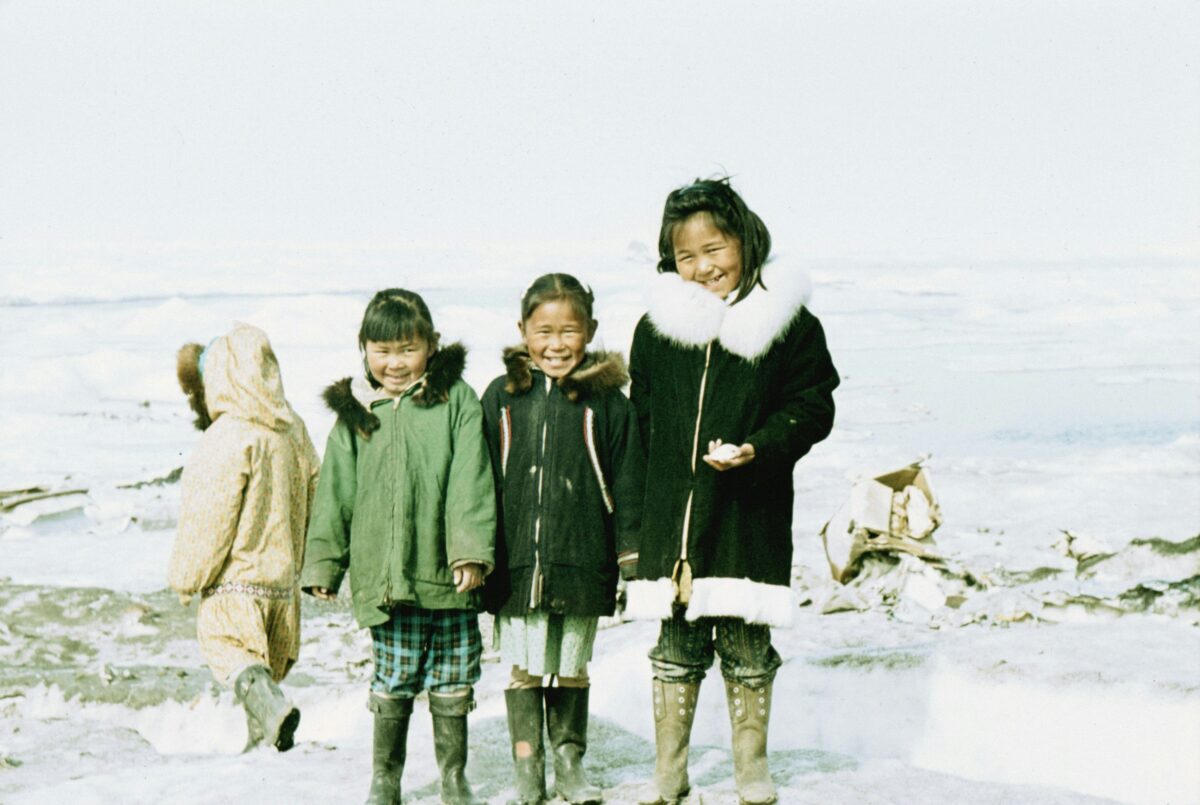
Inuktun

Inuktun is a language spoken by Inuit people from northwestern Greenland. The people – and by extension the language – suffered considerably in earlier years. In the late nineteenth century, American arctic explorer Robert Peary brought a group of six Inuit people, including two children, to New York at the request of American anthropologist Franz Boas, who hoped that studying them would prove some of his theories about cultural evolution.

In New York, this small group was housed in a museum as a public exhibit. Four of the six died within a year, of neglect and disease, after which their skeletons were put on display in the American Museum of Natural Science.

Unsurprisingly, Indigenous Greenlanders have tended to remain wary of researchers. However, texts by scholar Alfred Kroeber, who studied the Inuktun language in the late nineteenth century, give some insights into how the entirely oral language was spoken then, and how it has changed in the years since. Some researchers believe that the Inuktun people initially settled in Greenland as late as the 18th century. Contemporary linguist Andrew Garrett has found that Inuktun was then much more like North Canadian Inuit languages than it is today, suggesting the existence of complex cultural, communication, and migratory connections between the two regions.

Today, modern Inuktun is spoken by about 1000 inhabitants of Northwest Greenland, with most speakers also speaking standard Greenlandic, and many also Danish.

Photo Source: https://unsplash.com/photos/four-children-in-winter-coats-stand-in-the-snow-VRcBV-tQNM8

Categories
Interesting facts

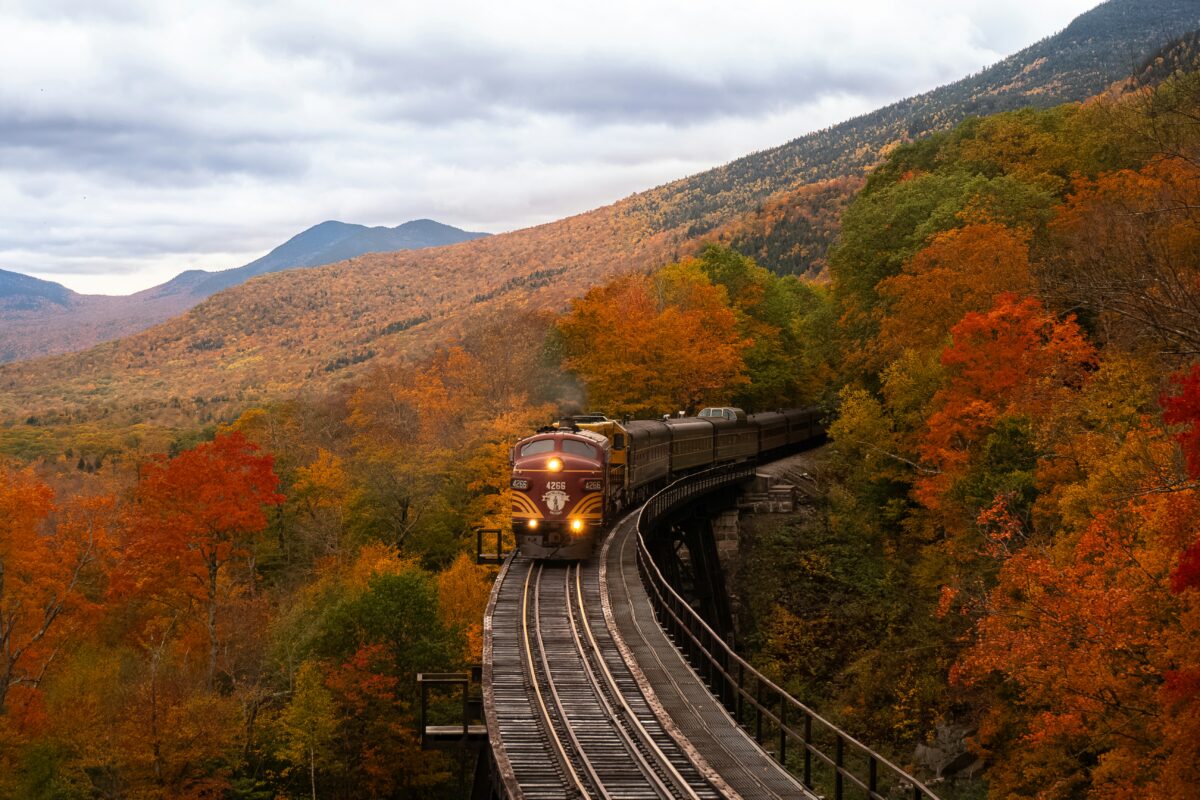
Trains

You might think that a good knowledge of engineering and locomotives is essential to work successfully with trains – and you’d be right – but did you know how important it is for train drivers to have good language skills too?

Think about it: often, trains travel across borders from one country to another, or sometimes even across various different borders. And if the driver and other staff members don’t change, that often also means they’re also passing from one linguistic environment into another. Now they need to be able to not just hear, but also understand, the essential safety and other messaging they receive from ground and station staff.

When train drivers don’t understand the language of the country they’re travelling through, that’s a serious safety issue – and it is one that periodically raises concerns. For example, train crews from Mexico are allowed, under certain circumstances, to travel about 10 km across the border into the United States, but only if they can demonstrate that they speak English well enough to understand any instructions they receive about safety.

Of course, one also hopes that similar essential rules apply to any American operatives working south of the border!

Photo Source: https://unsplash.com/photos/orange-train-between-fall-trees-El5zuQAtfeo

Categories
Interesting facts

Great Translators of the World – Kumārajīva

Great Translators of the World – Kumārajīva

Kumārajīva was born in Kashmir in about 344 CE. He grew up to be a Buddhist monk, studying under various scholars before settling on the Mahayanan school of Buddhism, becoming a renowned scholar and orator.

By 401 CE, after having mastered the Chinese language, he led a team of translators who worked together to translate many Buddhist texts from Sanskrit into Chinese. The Xiaoyao Gardens, where the translators worked, became a centre for Buddhist scholarship, and their translations, noteworthy for their distinctive easy-to-read style, are still central to Chinese Buddhism to this day. In fact, in many cases more recent translations have been rejected in favour of the ‘Kumārajīva versions’ that many still see as key texts.

Photo Source: https://unsplash.com/photos/brown-buddha-statue-near-green-mountain-under-blue-sky-during-daytime-jwr0xaXsYKk