101translations

Categories
Interesting facts

Great Translators of the World – Constance Bache

Constance was born in 1846 and grew up in Edgbaston, a suburb of Birmingham in England. She showed huge promise as a musician, studying music at the Conservatorium in Munich. When an injury to her right hand put a stop to her budding career, she moved to London and built a new life as a lecturer and a literary translator from German into English.

Constance was particularly well-known for her sensitive translations of musical librettos, particularly works by Liszt, Mozart, Humperdinck, and Schumann, and much sought-after at a time when performing operas in translation was much more popular than it is today.

Constance died in 1903, aged 57. Her translations of some of the great works of German opera are still performed today. We look forward to the revival of opera in local languages rather than the language of origin.

Photo Source: https://unsplash.com/photos/an-ornate-theater-with-empty-red-seats-Hne6drySGfQ

Categories
Interesting facts

The Voynich Manuscript

The Voynich manuscript, now located at Yale University, is named after the Polish, British and American book collector Wilfrid Voynich, who acquired it from a Jesuit college in Rome in the early twentieth century. The lavishly decorated manuscript contains over 38,000 characters that have never been deciphered, as well as numerous saucy drawings and depictions of alchemy and plants. It has been dated to the fifteenth century using radio-carbon analysis.

It’s not clear whether or not the manuscript represents a real language or code, or if it’s an elaborate hoax from the late middle ages, but many scholars have used various techniques in an effort to decode it.

New research suggests that the code may have been created using an Italian card game called Naibbe, dating to the same period. This game uses the number from the throw of a die to break language into single or double letters, and then uses the draw of playing cards to determine how to encrypt the letters. Attempts to replicate the text in the manuscript failed, but did produce comparable results.

Photo Source: https://commons.wikimedia.org/wiki/File:Voynich_Manuscript_(32).jpg (See page for author, Public domain, via Wikimedia Commons)

Categories
Interesting facts

Language under Anaesthesia

If you’ve ever had major surgery, you have probably had a general anaesthetic and, thankfully, don’t remember anything about it. The experience feels as though the brain is just ‘switched off’ for the period of the operation.

But new research shows that, although we are unconscious under general anaesthetic, parts of the brain are still active. Patients under anaesthesia were shown, under research conditions, to respond to sounds. If they were hearing podcasts, they responded to the speech they heard in real time, recognising and responding to individual words, and even using prior knowledge to predict what the speaker was going to say next. Although the patients were unconscious, their brains were displaying similar sorts of neural activity to those of people who are awake.

Language, it seems, is so ingrained in us as a species that we just can’t turn it off, even when we are knocked out. These discoveries highlight fascinating research pathways for the role of language for people who are asleep or in comas.

Photo Source: https://unsplash.com/photos/a-group-of-doctors-performing-surgery-on-a-patient-ZuIucrhwHvA

Categories
Interesting facts

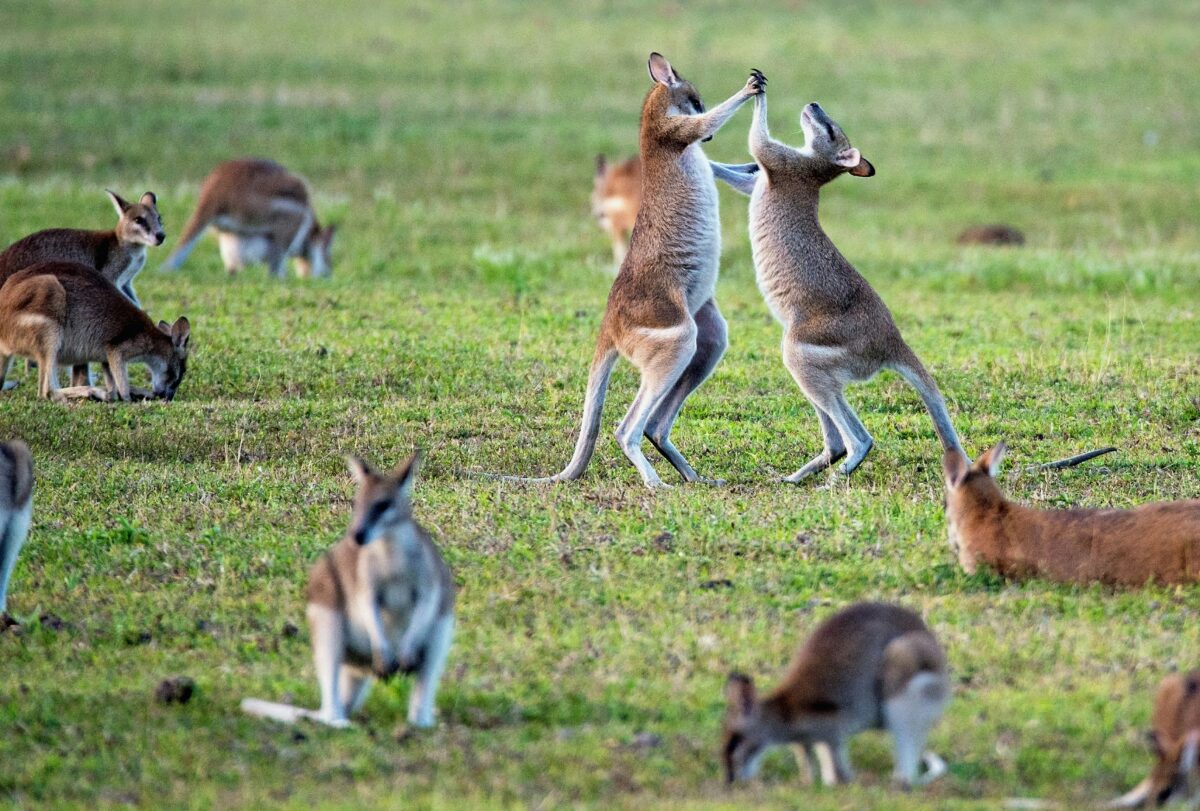
Australian Swearing

Australians tend to pride themselves on their plain-talking and the gusto with which they use swearwords in their everyday English.

As well as the usual swearwords shared throughout the English-speaking world (we’ll assume you know the basics), Australians have their own array of profanities and vulgarities that are very distinctive. They can use these not just to hurl insults, but also to implicitly say something about what it means to be Australian.

To the alarm of purists, however, younger Australians today are tending to use fewer Australia-specific swearwords in favour of more generic terms understood throughout the anglosphere. ‘Political correctness’ and exposure to international media – especially African-American slang, popularised via hip hop and rap music – have been blamed for this lamentable decline in profanity diversity.

We’re all terribly polite at 101translations, but we also regret this decline in distinctively Australian swearing. The words we used to blow off steam are deeply rooted not just in emotion, but also in the history and experience of the place they come from.

A language without swearwords is, as an Australian might say, about as useful as an a**ehole on an elbow.

Photo Source: https://unsplash.com/photos/kangaroos-on-grass-field-yLxQRYpuwqg

Categories
Interesting facts

Basque Language in Idaho

The Basque language is spoken in parts of Spain and France, places from which, historically, many migrants left to start new lives overseas. As a result of this, there are small pockets of Basque speakers around the world, particularly in North America.

Minority languages often struggle to survive, surrounded by majority languages that give advantages in commerce and the wider world. But Basque is surviving surprisingly well, perhaps partly because Basque speakers in Spain and France were already used to managing two or more languages in their daily lives.

Like many others, Basque fortune-seekers flocked to California during the gold rush in the nineteenth century. Most of them, of course, failed to make their fortune panning for gold, but they tended to go into other sectors, including mining and herding sheep, in various parts of the United States. Their friends and relatives joined them, and gradually a sizable Basque community took root in America, with an area of Idaho noted for its large Basque population.

For a while, it looked as though Basque was losing out to English, but it has witnessed a surprising resurgence. Basque-Americans get together to play and sing traditional music and songs, to eat Basque meals, and to speak Basque, showing that they have no problem with being Basque and American at the same time.

Photo Source: https://unsplash.com/photos/a-rocky-area-with-trees-and-mountains-in-the-background-B3X6bxDHDvQ

Categories
Interesting facts

Laughter and the Origins of Language

We’ve written before about the different types of communication animals use, and what these have in common with human language. Primates – apes and monkeys – which are so close to humans, give us some clues about how human language originated.

A new theory is coming out of research carried out at the University of Warwick, England, led by Chiara de Gregorio. It suggests that human language may originate in laughter. Primate species, including humans, chimpanzees, and gorillas, all enjoy a good laugh and laugh in response to various stimuli, including being tickled – and our laughs are remarkably similar, with rhythmic intervals between successive sounds. To the researchers, this suggests that we all share a common ancestor species that liked to laugh too, and that laughter has remained essentially the same for about 15 million years!

Humans’ laughter differs from that of other apes – we are able to use it politely in response to social cues, whereas they do not. This indicates a greater awareness and control of delicate social situations. At some point in our evolutionary history, this may have been the change that sparked the development of human language.

And that’s no laughing matter.

Photo Source: https://unsplash.com/photos/a-person-sitting-on-a-couch-with-a-laptop-X1GZqv-F7Tw

Categories
Interesting facts

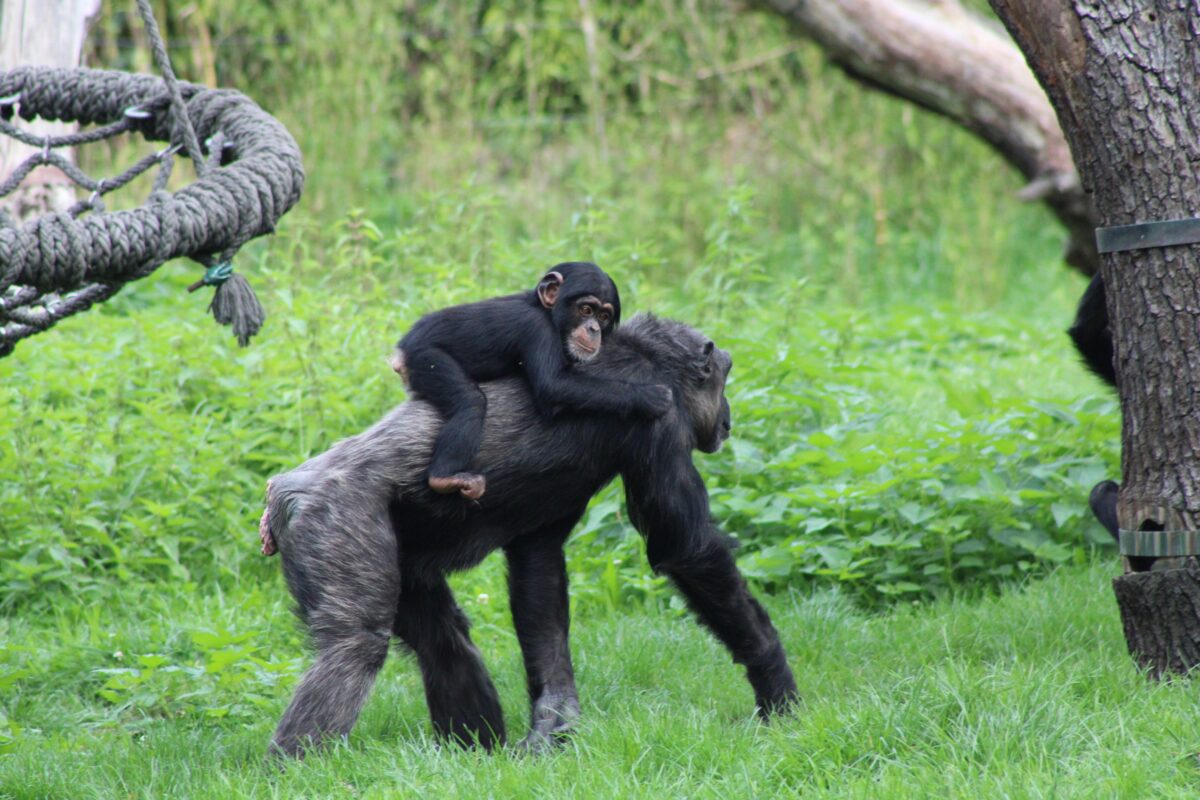
Bonobos

Regular readers of our blog know that while our business is facilitating communication between humans, we’re very intrigued by how animals communicate too.

Recent research by scientists from the University of Zurich and Harvard University explored vocal exchanges between bonobos in the Democratic Republic of Congo. They found out that the bonobos – which are similar to chimpanzees – string together different sounds into phrases and, further, that these phrases seem to communicate specific meanings. For example, one sound, which showed that the animal had an intention, could be connected with another, which meant that the group needed to stay coordinated, to give a combined meaning like: ‘Let’s all do this thing together.’

While bonobo communication falls sort of being an actual language, it is essential for the well-being of the social groups they live in. They inhabit dense forested areas and often cannot see the other members of their group. By communicating as they do, they can ensure that they all stay together and direct each other towards certain common goals.

This research into the communication style of an animal with which we humans share a relatively recent common ancestor provides insights into how our language may have evolved, and that the complex sentence structures we use today are likely to have started with simpler building blocks.

Photo Source: https://unsplash.com/photos/a-couple-of-monkeys-playing-in-the-grass-E81QVHjlh3M

Categories
Interesting facts

Spanish in the US

The speaking of Spanish in the US has become a focus of the culture wars, with some Americans seeing it as an assault on ‘American values’. When Bad Bunny, a rap artist, performed in Spanish at the Super Bowl, Donald Trump complained that nobody understood a word he was saying.

That wasn’t true, though. Not even close. In fact, America has almost as many Spanish speakers as Spain – about 40 million – with many more studying Spanish at school or college and speaking it well as a second language.

At the same time, however, families who move to the US from Spanish-speaking countries tend to assimilate quite quickly, becoming primarily English speakers within a couple of generations, and finding out, when they visit their countries of origin for their holidays, that it’s hard to have a conversation with their Abuelita. And Spanish speakers in the US, and to some extent in Latin America, make abundant use of loanwords from English, like ‘picop’ (pick-up truck] and ‘jaiscul’ (high school), and even import grammatical structures from English.

We’ve said it before, and we’ll say it again: linguistic diversity is beautiful, and there’s no reason why people can’t happily speak two or more languages. The more communication the better!

We’re sure that Abuelita would agree.

Photo Source: https://unsplash.com/photos/a-flag-on-a-pole-JPNh_hW_SPk