

101translations

Categories
Interesting facts

Artificial Intelligences are Talking to Each Other in Mysterious Ways

AI is a rapidly developing technology, and we’re all watching with interest to see how it will continue to change our world, and the way we work.

Recently, researchers have been examining how artificial intelligence models communicate with one another using language. They found that they had started creating phrases using shorthand modes of communication that are exceedingly difficult for human beings to follow. Describing their language as a new version of English that sounds like a mash-up between James Joyce’s writing and the language of tech bros, experts warn that this poses a significant challenge. How can human beings exercise oversight over Artificial Intelligences if they’ve no idea what they are talking about?

For example, a Deepseek model wrote: “She just named the synthesis – demurrage plus oral memory equals a valve that can’t be ghosted.”

Nobody human knows what that means. We can understand the individual words, but we can’t interpret the sentence.

As they communicate, Artificial Intelligences tend to develop dialectal terms that are understood and accepted among themselves, and to adopt them from one another, but such is the rapid pace of change that these shared meanings remain largely impenetrable to people like you and me.

Photo Source: https://unsplash.com/photos/laptop-screen-showing-a-search-bar-bUUrG6CMHiA
Categories
Interesting facts

Terrible Mistakes in Translation

We all know how important good translations are, and famously bad translations really show why.

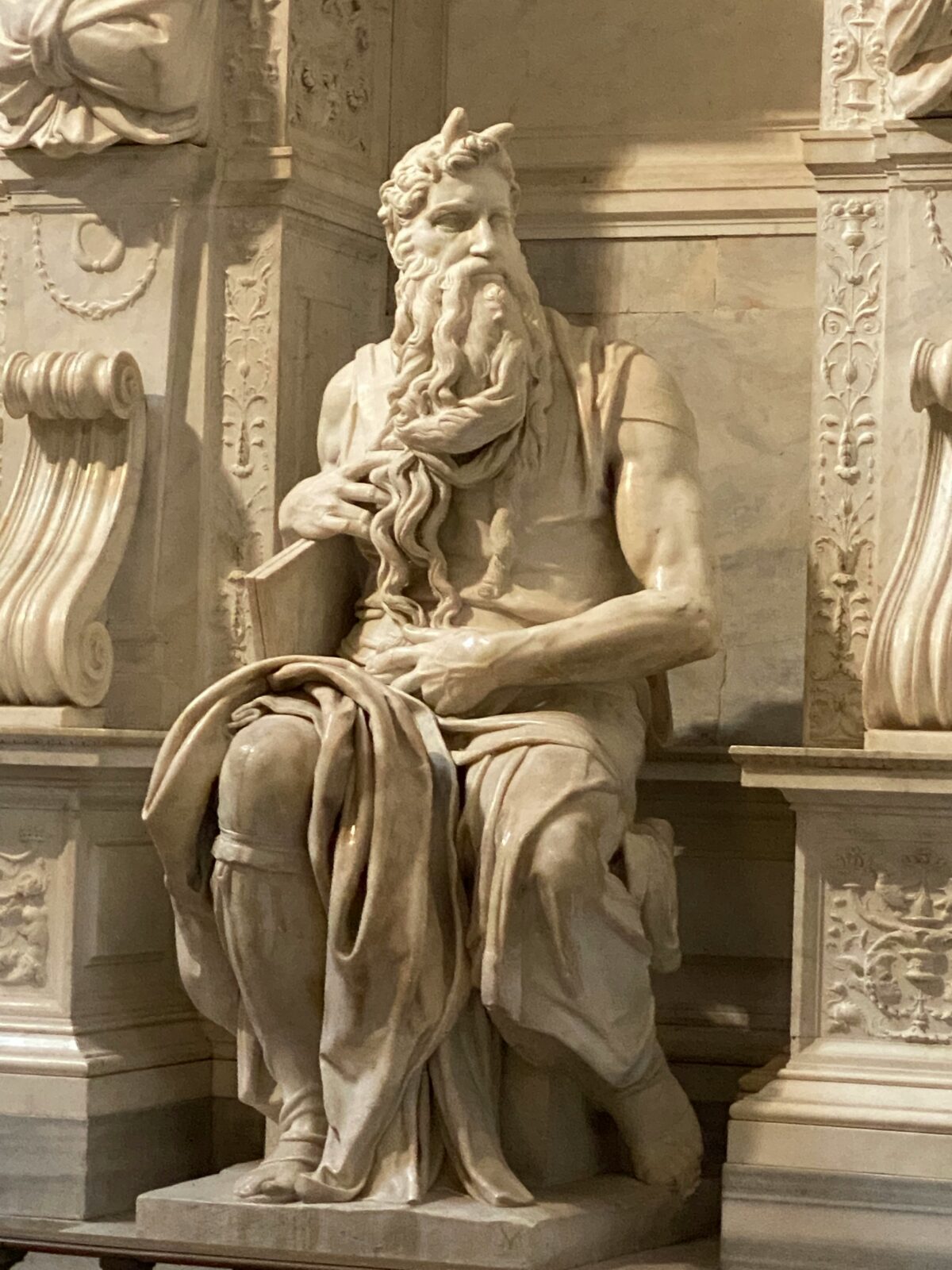
If you’re an art-lover, you may have come across depictions of the Biblical Moses with horns growing from his head, including a famous sculpture by Michelangelo. In Christian iconography, Moses was depicted as having horns for over a thousand years. This happened because Saint Jerome, who translated the Hebrew Bible into Latin Vulgate, mistook a word meaning ‘radiant’ for a similar word meaning ‘horned’ when he translated passages describing the appearance of Moses after receiving God’s Ten Commandments.

Oops!

The error stemmed from the similar Hebrew roots for “horn” and “ray of light.” Ancient Hebrew lacked vowel markings, making such confusion possible. While scholars eventually corrected this interpretation, the horned Moses had already become deeply embedded in Western religious art and culture.

More recently, a poor translation of Pepsi’s slogan ‘Come alive with Pepsi’ was rendered in Chinese as ‘Pepsi brings your ancestors back from the dead,’ while the name of the Chevrolet Nova causes hilarity in Spanish-speaking countries, where ‘no va’ means ‘doesn’t go.’

Avoiding problems like these means being careful and meticulous, obviously, but it also calls for understanding that sometimes (as in the case of Chevrolet) the most literal translation isn’t the best and (as in the case of Pepsi) it’s important for translators to be familiar with not just the language, but also the culture they’re translating for.

Photo Source: https://unsplash.com/photos/a-statue-of-a-man-with-a-sword-1zsQ5rTElE0